
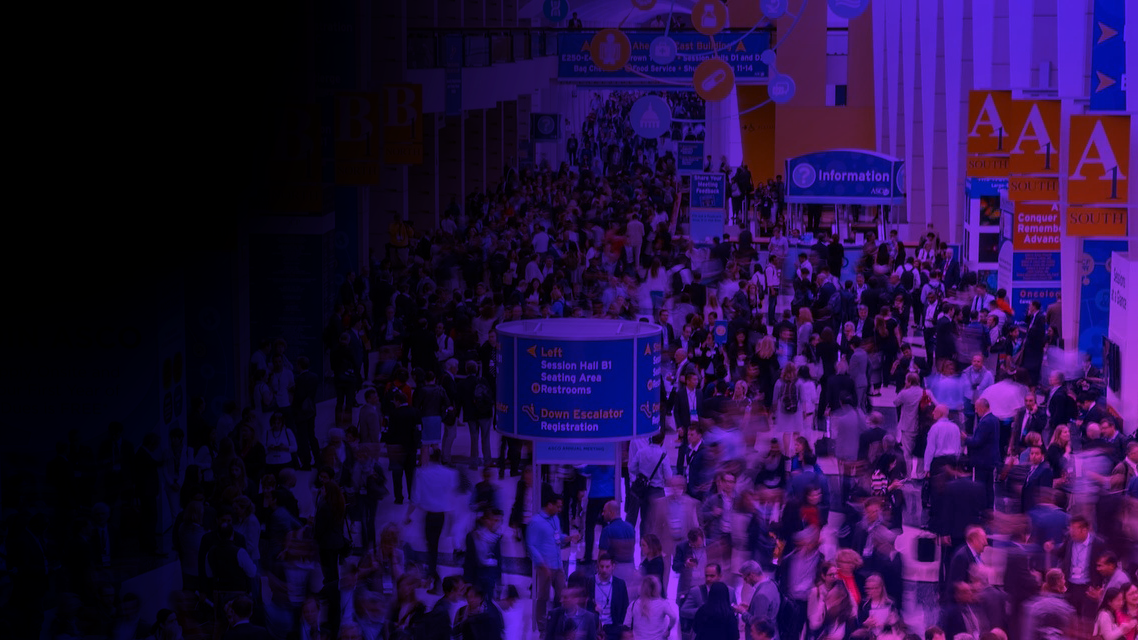
May 30 – June 3, 2025 | Chicago
ASCO
What Mattered From ASCO 2025
From Taylor’s View:
The ASCO Annual Meeting is one of the most influential gatherings in global oncology. In 2025, the hybrid event drew roughly 44,900 registrants, including 35,500 oncology professionals and more than 7,400 exhibitors, filling McCormick Place with biopharma, diagnostics, and patient-advocacy organizations spanning established leaders and emerging biotech.
Attendees come to learn. Nearly half of oncologists cite staying current with new thinking as the most valuable part of attending, and the 2025 show made that clear. The show floor has shifted from information delivery to experience-enabled learning, with brands that prioritized interaction, education, and clarity seeing longer dwell times and deeper engagement.
THROUGH OUR LENS.
THROUGH OUR LENS.
ASCO is much more than brand presence. It’s about education delivered through experience.
Trends:
-
Education, not advertising, dominated successful exhibits. Brands used interactive LED walls, VR and AR experiences to let clinicians explore pathways, mechanisms of action, and clinical data at their own pace. The most effective spaces paired this interactivity with analytics, using heat mapping and AI-driven content logic to adapt narratives based on visitor behavior. These insights fed directly back into marketing and medical teams, closing the loop between engagement and learning.
-
Circular design was no longer aspirational. Many exhibitors deployed lightweight, reusable structures built from FSC-certified wood, structural cardboard, recycled carpet, and reclaimed PET. These booths were designed to travel across multiple congresses with minimal waste, often reducing freight, drayage, and install time significantly. Brands that clearly communicated their sustainability approach, backed by data, gained credibility with physicians and regulators.
-
Immersion was used thoughtfully to make complex science tangible. Curved LED walls, wraparound video canvases, and walk-through environments translated abstract biology into physical experience. From blood-vessel tunnels to gallery-style metaphor installations, exhibitors used sight, sound, and touch to help clinicians intuitively understand disease states and therapeutic impact.
-
Amid the sensory intensity of the hall, many brands intentionally slowed the pace. Calming palettes, natural materials, greenery, and quiet seating areas created space for reflection and conversation. These environments reinforced the human reality behind oncology care and offered a welcome contrast to high-energy displays.
-
Gamification was used to support learning rather than distract from it. VR microscopes, holographic patients, scavenger hunts, and personalized printouts encouraged exploration while maintaining scientific integrity. When used judiciously, these mechanics extended dwell time and helped reinforce key educational messages.
-
Meaningful conversations often happened over coffee. Exhibitors invested in lounges, cafés, and informal meeting spaces that encouraged peer-to-peer exchange. These hospitality-driven environments supported longer stays and deeper discussion, especially among clinicians navigating packed scientific schedules.
-
Regulatory discipline was evident throughout the hall. Brands prioritized fair-balanced, evidence-based messaging. Interactive tools were designed to guide visitors toward approved content and supervised learning, reinforcing trust without compromising engagement.
From the Floor. ASCO rewards brands that respect the science and the audience.
The experiences that landed were clear, disciplined, and purposeful. They didn’t over-explain or over-entertain. They delivered substance, fast.
It’s a clear signal of where expectations are headed.
Standout Experiences
These experiences show how brands cut through by leading with scientific relevance, clarity, and disciplined design. Each reflects one or more of the themes above in action on the ASCO floor.
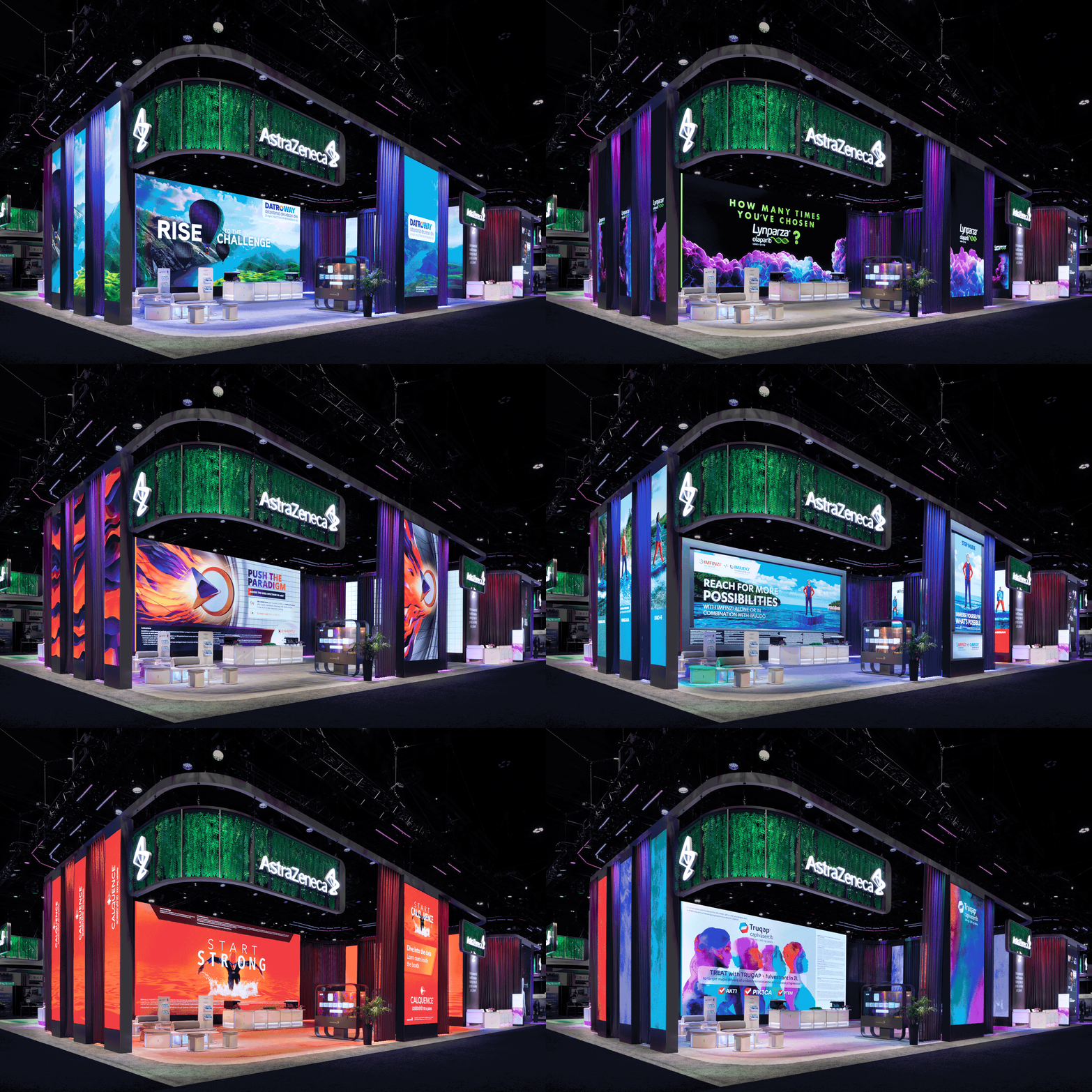
AstraZeneca’s 90 × 120-foot exhibit was structured as a flowing series of modular “rooms” rather than a single monolithic space. Semi-transparent fabric panels created clear sightlines, while reconfigurable components allowed the space to scale across hundreds of congresses. A synchronized 360-degree LED environment, RFID-enabled interactions, transparent OLED screens, and mixed-reality experiences allowed visitors to curate personalized digital content baskets in place of printed materials. Sustainability was integral to the design, using FSC-certified plywood, structural cardboard, recycled carpets, and reclaimed PET panels. A dedicated mixed-reality zone explained the lifecycle of each material.
AstraZeneca “Green Giant”
The exhibit drew more than 18,000 unique visitors, captured 87% conversion, and achieved dwell times exceeding seven minutes, all while reducing freight costs by over 25%.
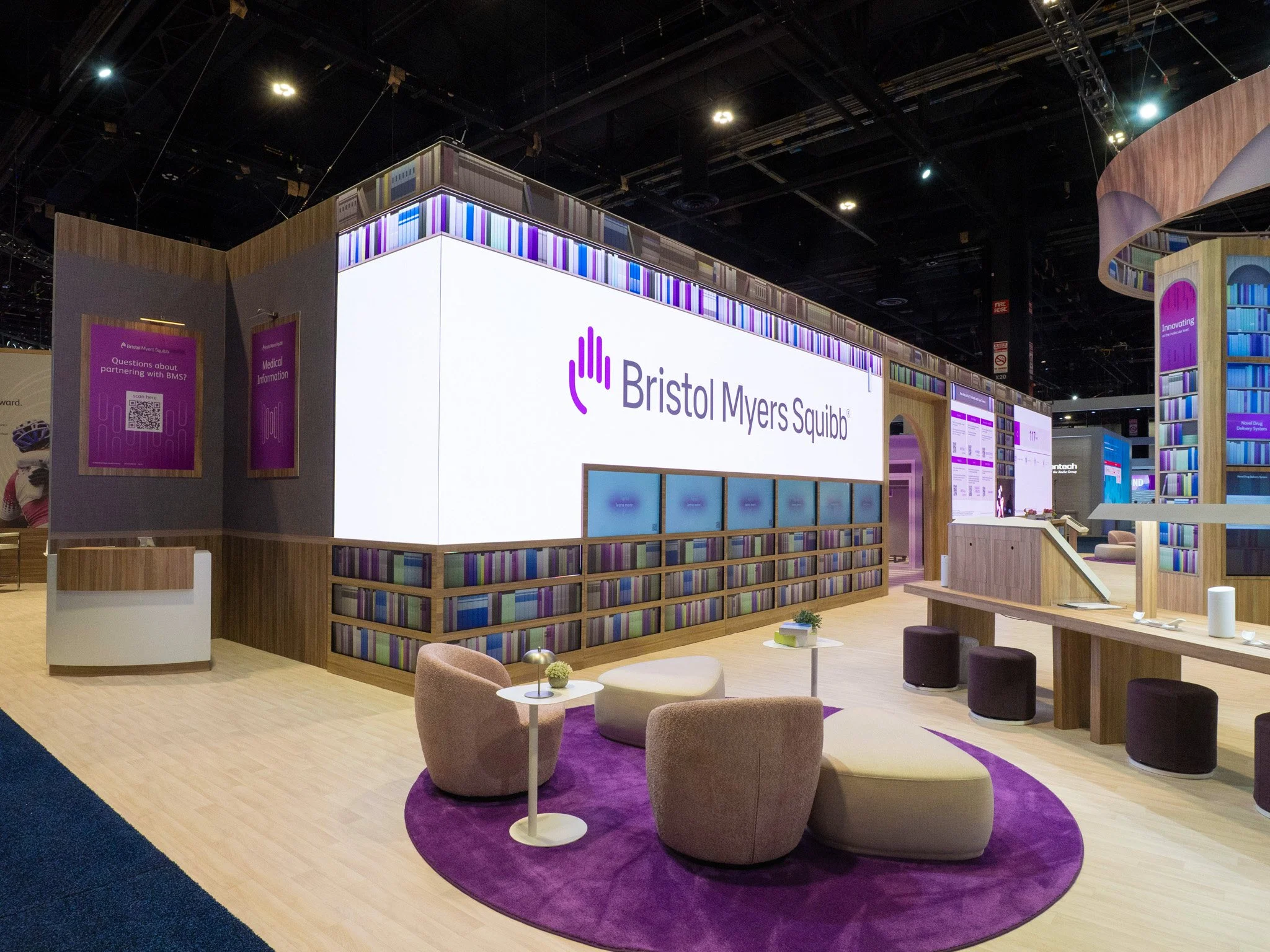
Bristol Myers Squibb transformed its booth into a tranquil, garden-inspired retreat. Real plants, warm wood tones, and a landscaped central “house” created a calming environment that encouraged reflection and conversation. Patient stories and scientific content were woven into the space via a long LED wall framed by greenery. The experience emphasized humanity over spectacle and consistently drew longer, more thoughtful visits.
BMS Botanical Oasis
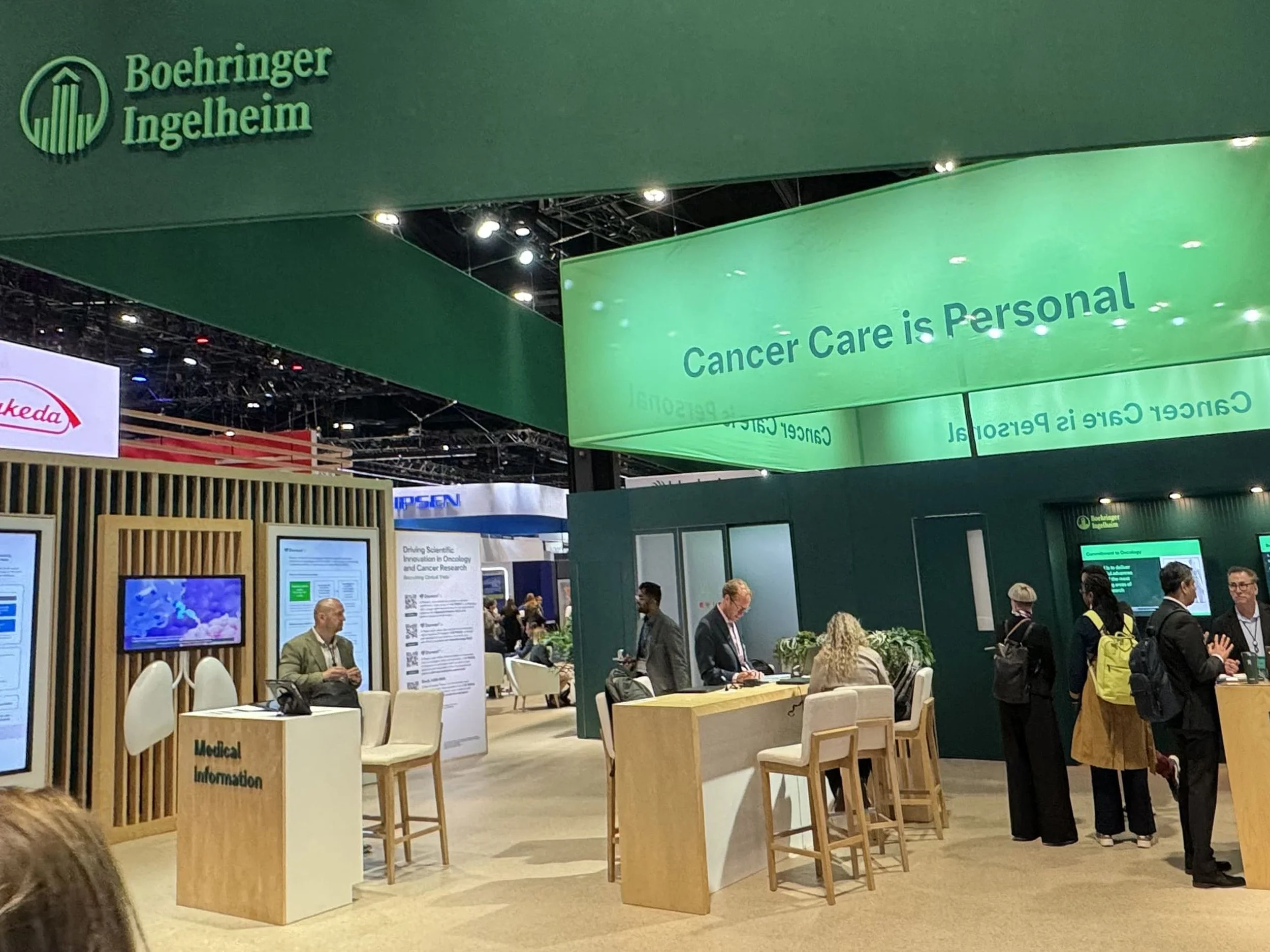
Boehringer turned its booth into an art gallery that juxtaposed masterpieces with oncology. Three vertical monitors displayed works like the “Mona Lisa” and “Girl with a Pearl Earring”; as attendees watched, hidden digital layers revealed molecular pathways related to dedifferentiated liposarcoma. Gallery‑style placards explained the science, fusing creativity and education.
Boehringer Ingelheim Art Meets Science
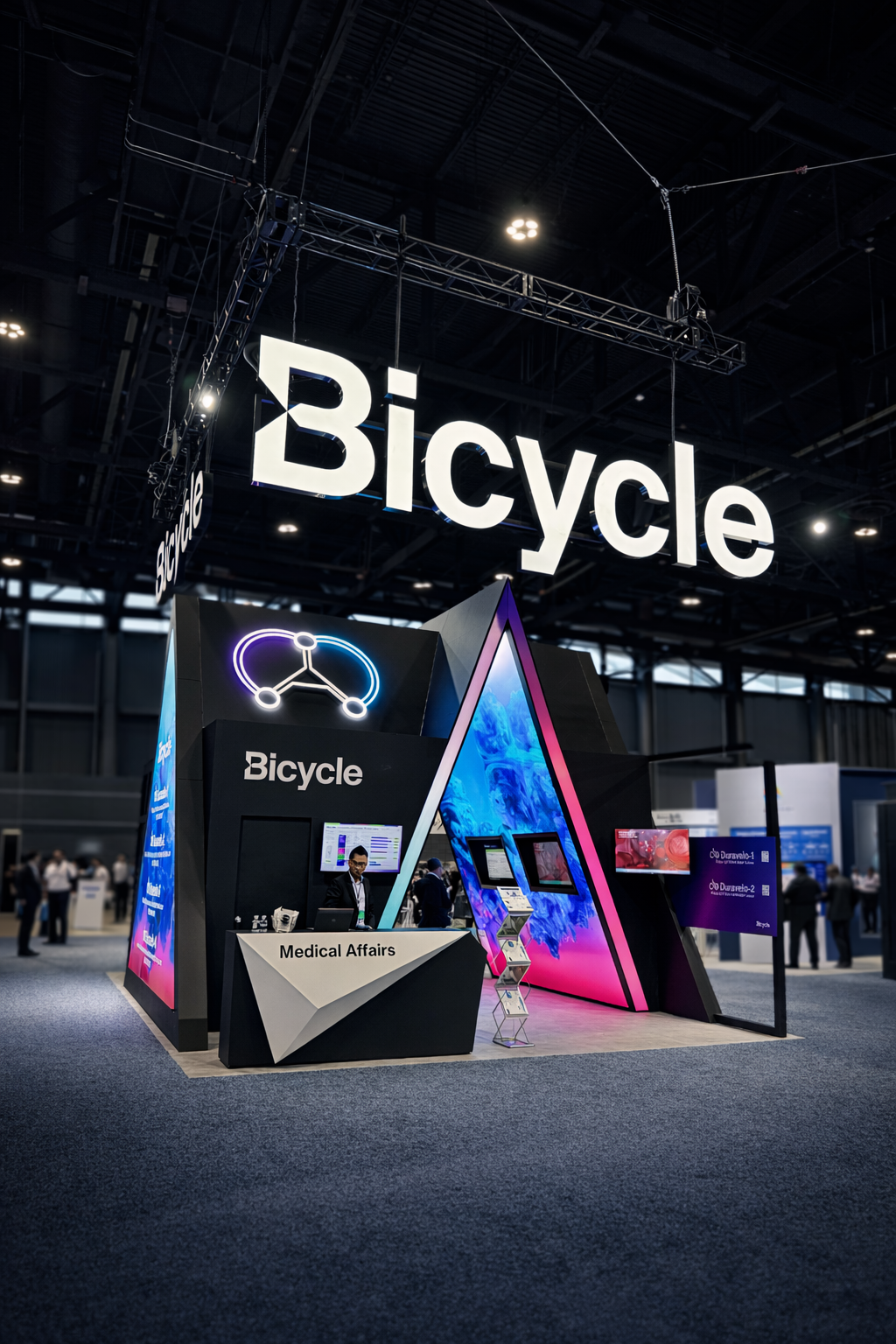
Bicycle Therapeutics Triangle of Innovation
First‑time exhibitor Bicycle Therapeutics made a statement with a modest 20 × 30‑foot booth shaped like an A‑frame triangle. The architecture mirrored the precision of its “bicycle molecules.” A 25 × 7‑foot backlit logo towered overhead and an immersive tunnel invited visitors to listen to Nobel laureate and co‑founder Sir Greg Winter discuss the technology. The bold design showed that small booths can deliver outsized impact.
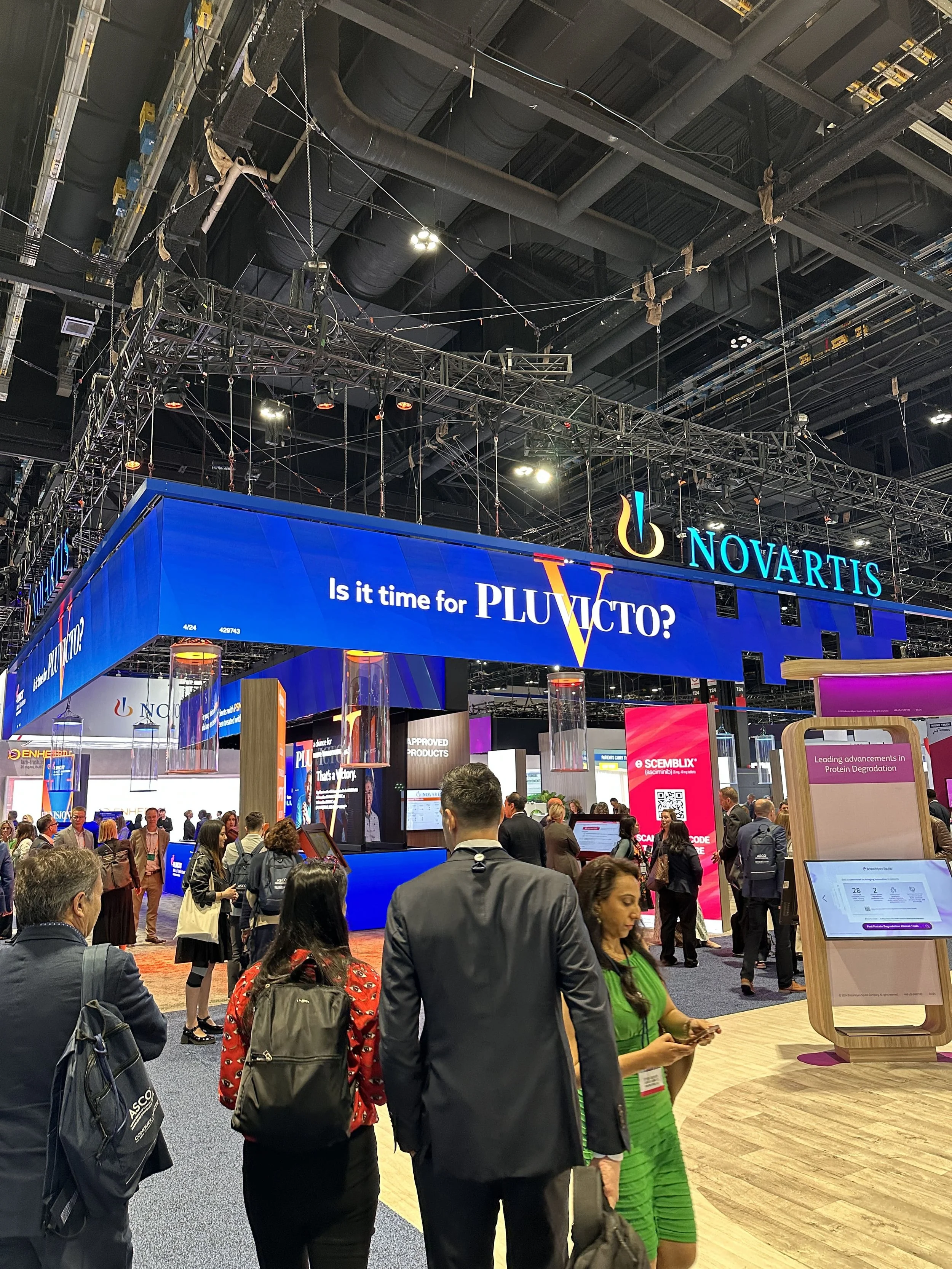
Novartis’ experience combined moving transparent LED panels with a massive LED wall to create a dynamic digital environment. Interactive stations offered augmented‑ and virtual‑reality experiences, and attendees could lift a foam “rock” to feel the weight of living with chronic myelogenous leukaemia. The space demonstrated how high‑tech storytelling and tactile empathy can coexist.
Novartis Tech Wonderland
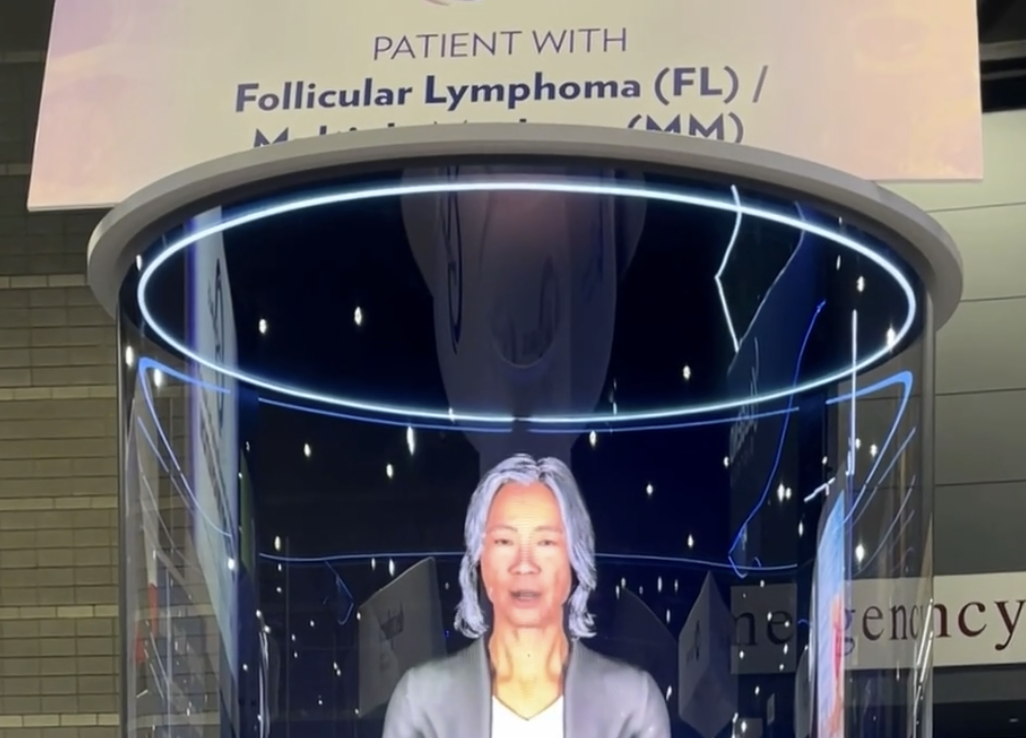
Named one of the most innovative booths of ASCO 2025, Encompass invited attendees to explore tissues, cells and cancer antigens through VR glasses. Beside the VR microscopes stood life‑size holographic patients who conversed with visitors about their diagnoses and treatment journeys. An on‑site printer personalised badges and posters for attendees. This combination of immersive technology and customisation exemplified experiential education in healthcare.
Encompass VR and Holographic Learning
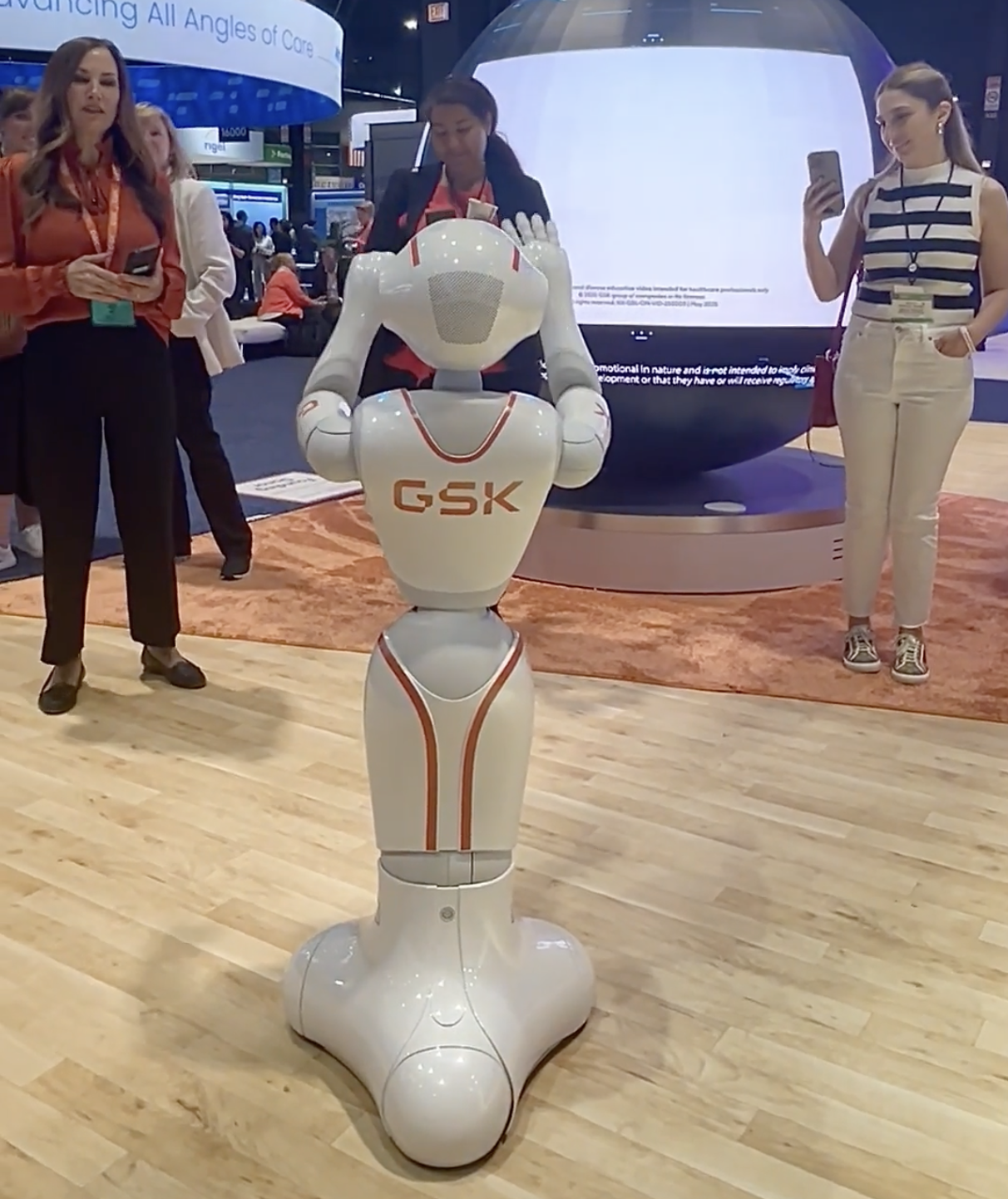
GSK’s exhibit paired education with whimsy. A small robot, stationed next to a massive globe, danced and chatted with visitors. The approachable mascot drew crowds and served as an icebreaker before attendees moved into deeper discussions about the company’s oncology pipeline.
GSK Dancing Robot
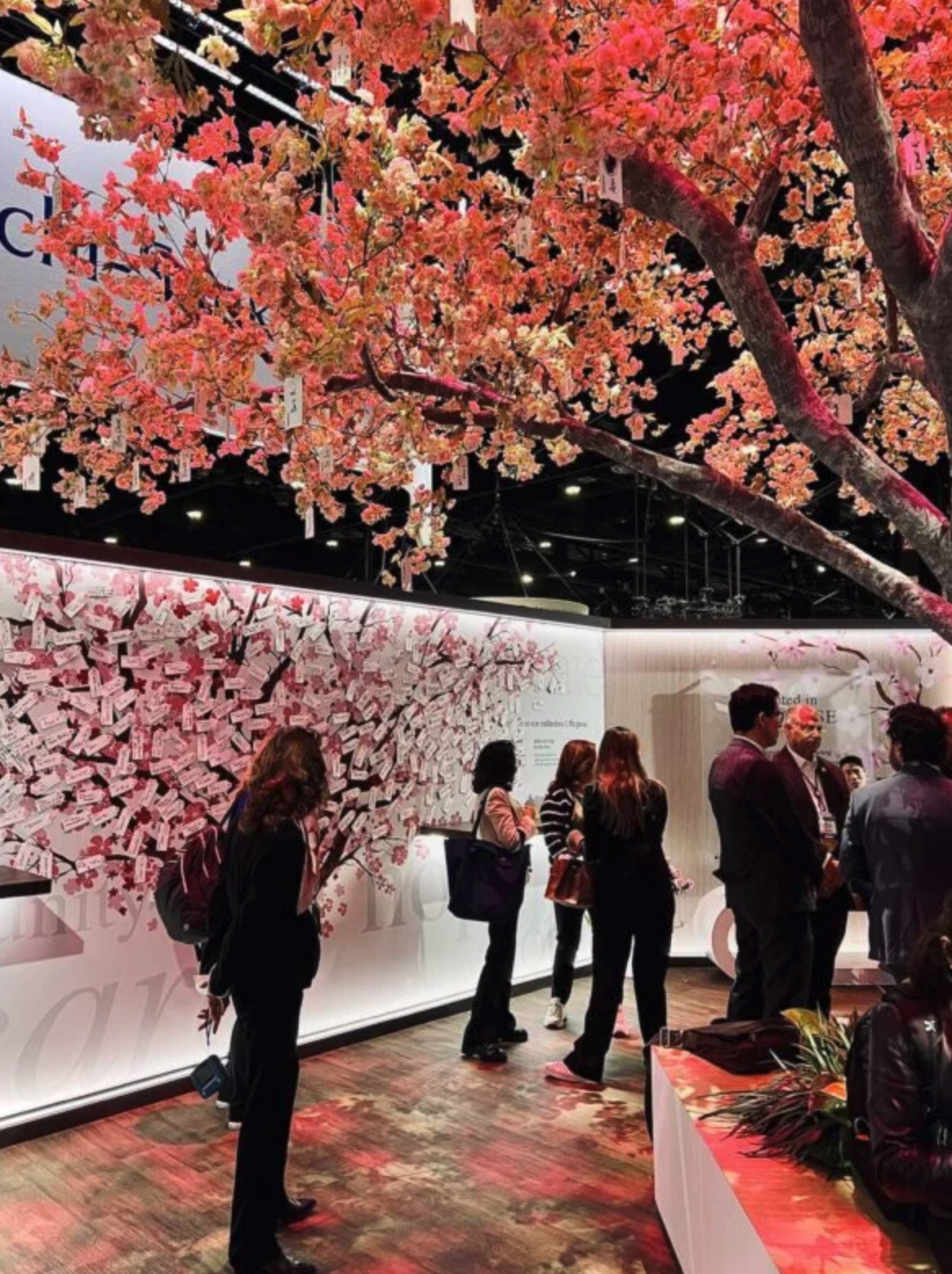
Daiichi Sankyo captivated the hall with a life‑size cherry blossom tree behind its café, inviting visitors to gather and take photos. Next to the tree was a “life‑size molecule” exhibit explaining the mechanism of action of its ADC therapies. The juxtaposition of natural beauty and scientific storytelling made the booth both Instagrammable and educational.
Daiichi Sankyo Cherry Blossom Café
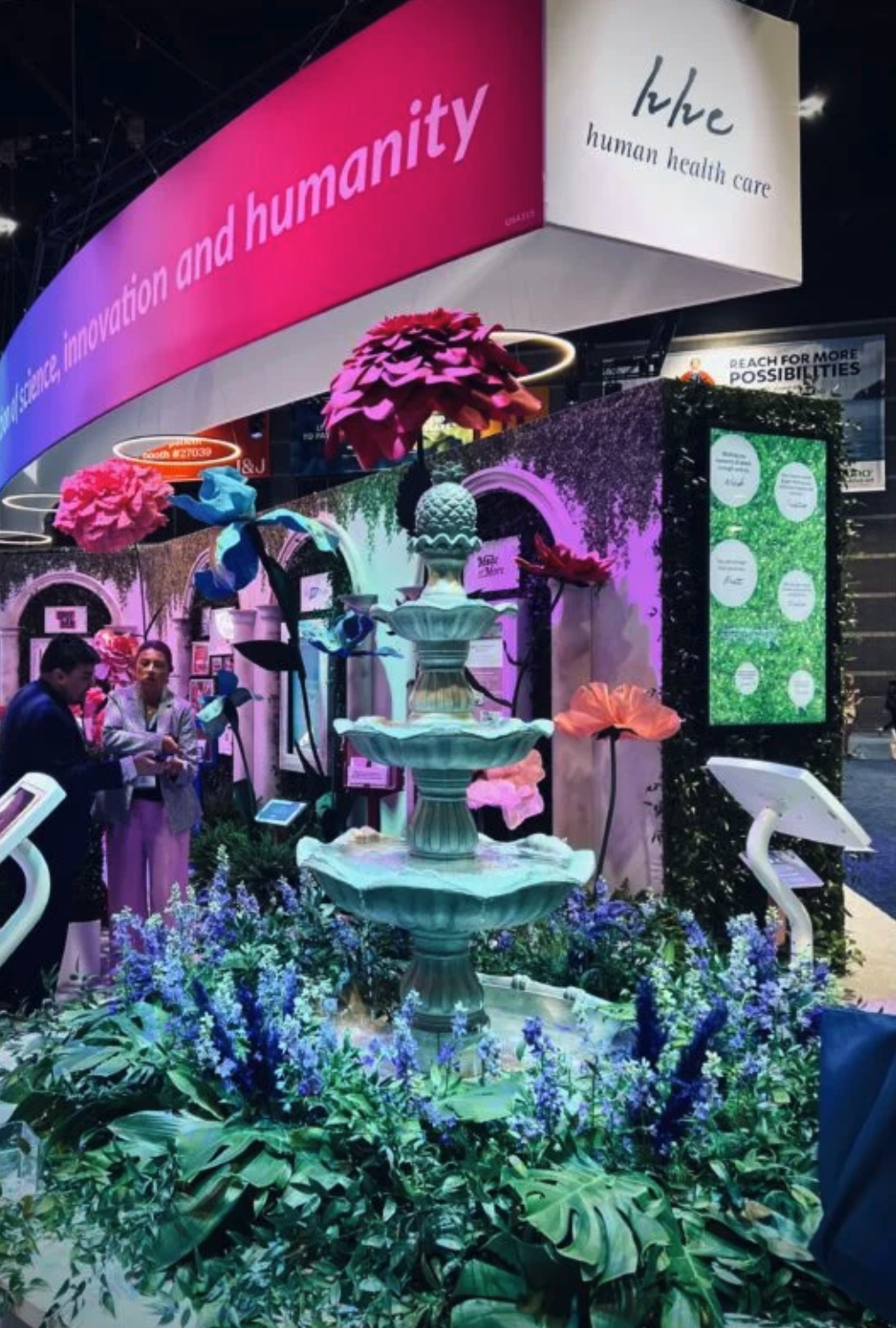
Eisai created a purplish “Garden of Eden” that felt far removed from the tech‑heavy hall. Visitors cast wishes into a fountain; each wish was printed on seed‑paper postcards and later included in Magnolia Meals at Home deliveries for patients. Wishes appeared on a large screen, spreading positivity throughout the space. The activation married emotional engagement with a tangible patient‑support initiative.
Eisai Garden of Eden
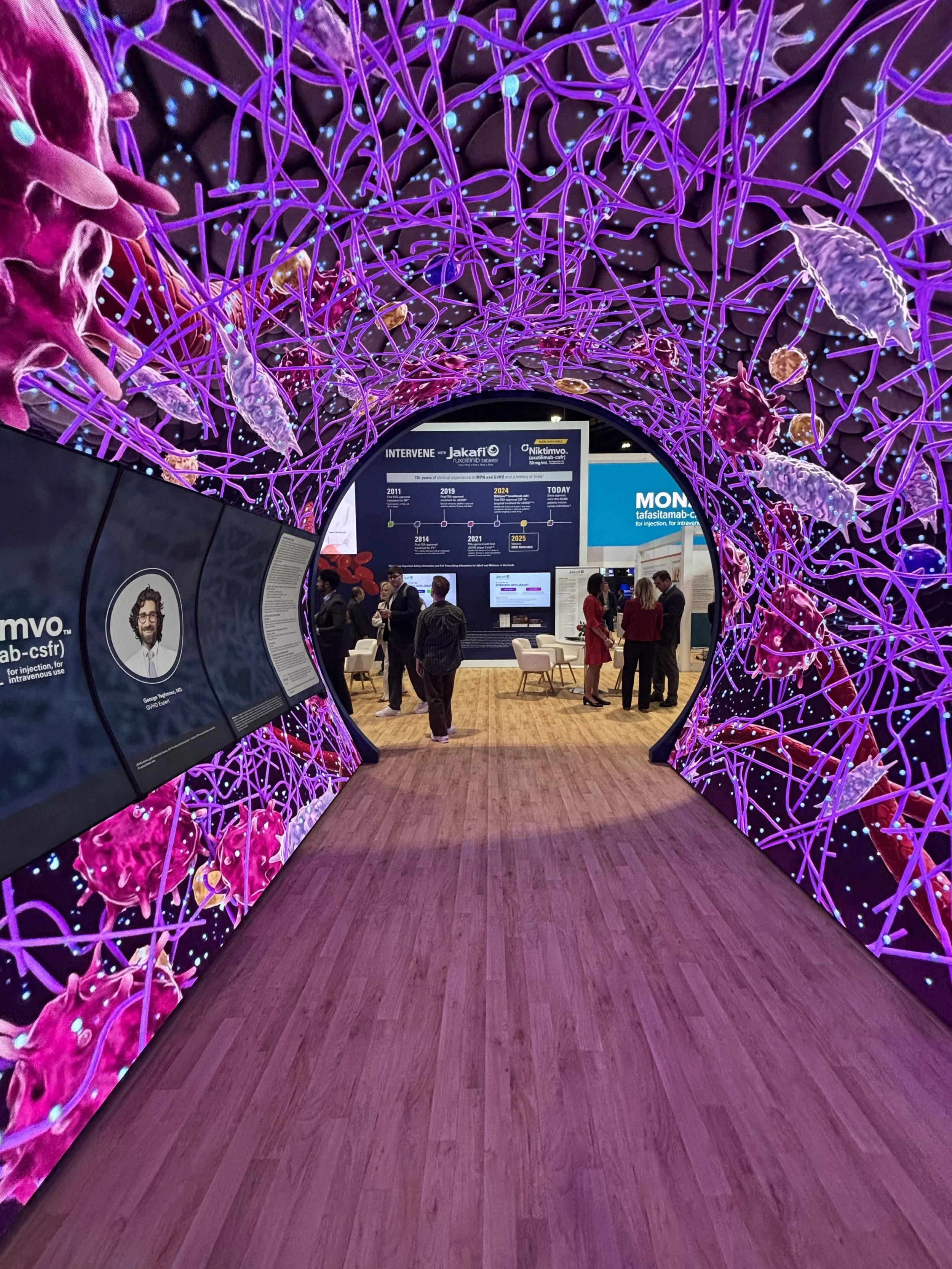
Incyte created a fully immersive educational journey through a rare blood disorder. An LED tunnel lined with curved screens replicated the inside of a blood vessel, with animated blood cells flowing around visitors. Four curved monitors featured expert talks from physicians such as Dr. Ruben Mesa and Dr. Claire Harrison, linking the sensory experience to clinical education. The installation turned complex pathology into an intuitive, memorable walk‑through.
Incyte Vein Voyage
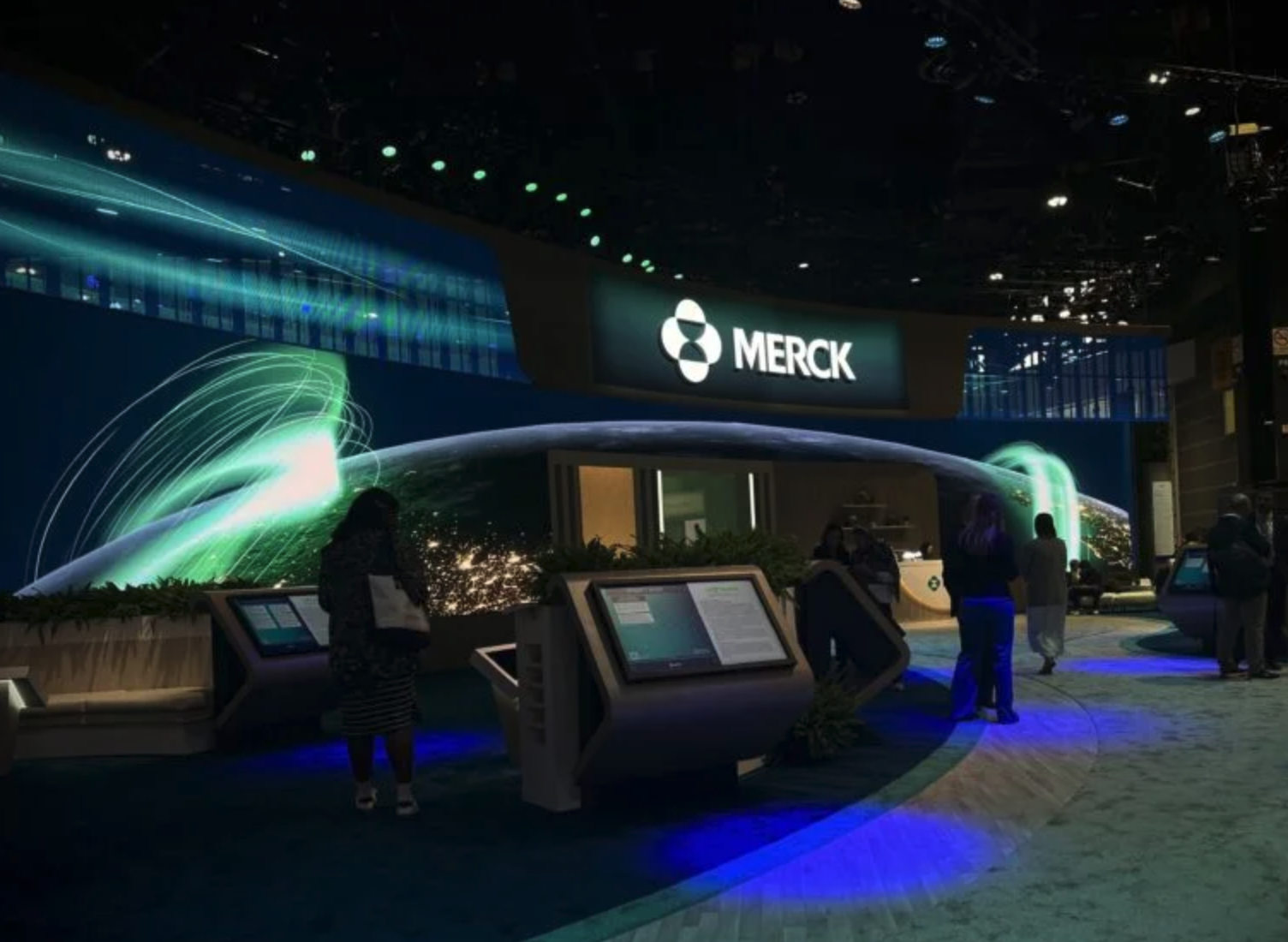
Merck constructed a spaceship‑like arena dominated by an ultra‑wide screen showing Earth and a massive 3D globe. The impressive visuals attracted visitors from across the hall. Though the design looked like entertainment, it effectively contextualized the company’s pipeline within a global perspective, reinforcing the scale of its ambitions.
Merck The Light Show
These experiences show how brands cut through by leading with scientific relevance, clarity, and disciplined design. Each reflects one or more of the themes above in action on the ASCO show floor.
Strategic Recommendations
-
Use VR, AR, and holographic tools to help clinicians explore data and mechanisms of action firsthand. Anchor these experiences in clear narratives and expert guidance so innovation enhances understanding rather than distracting from it.
-
Design spaces with recyclable materials and modular systems that can be reused across congresses. Clearly communicate sustainability metrics to demonstrate responsibility and operational discipline, not just intent.
-
Pair immersive storytelling with spaces designed to slow the pace. Natural materials, comfortable seating, and quiet areas for reflection improve dwell time, brand perception, and the quality of conversations.
-
Incorporate challenges, guided journeys, or personalized takeaways to encourage exploration without trivializing the science. Ensure all data capture and interactions comply with privacy and regulatory requirements.
-
High-quality coffee, healthy food, and comfortable meeting spaces are not perks; they are strategic tools. These environments support peer-to-peer exchange and deeper engagement with key opinion leaders.
-
Define success upfront, focusing on qualified engagement, dwell time, and post-show follow-up. Integrate analytics into interactive demos and use the data to refine future exhibits and demonstrate ROI.

The Takeaway
ASCO’s exhibition hall has evolved from rows of static posters into a landscape defined by immersive learning and intentional design. The 2025 meeting made one thing clear: oncologists respond to experiences that combine scientific rigor with clarity, empathy, and thoughtful execution. Brands that invest in interactive education, embrace sustainability, and respect the human realities of cancer care stand out in a crowded hall.
Looking ahead to ASCO 2026, the opportunity is not to be louder, but to be more meaningful. The goal is not spectacle for its own sake, but moments of insight and connection that ultimately support better patient care.
See how these trends translate into real programs
We’re developing deeper trend breakdowns by event and industry, with practical implications for brands and agencies.
For now, if you’d like to talk through what these signals could mean for your next program, fill out the form or contact us to learn more.
info@taylorinc.com