
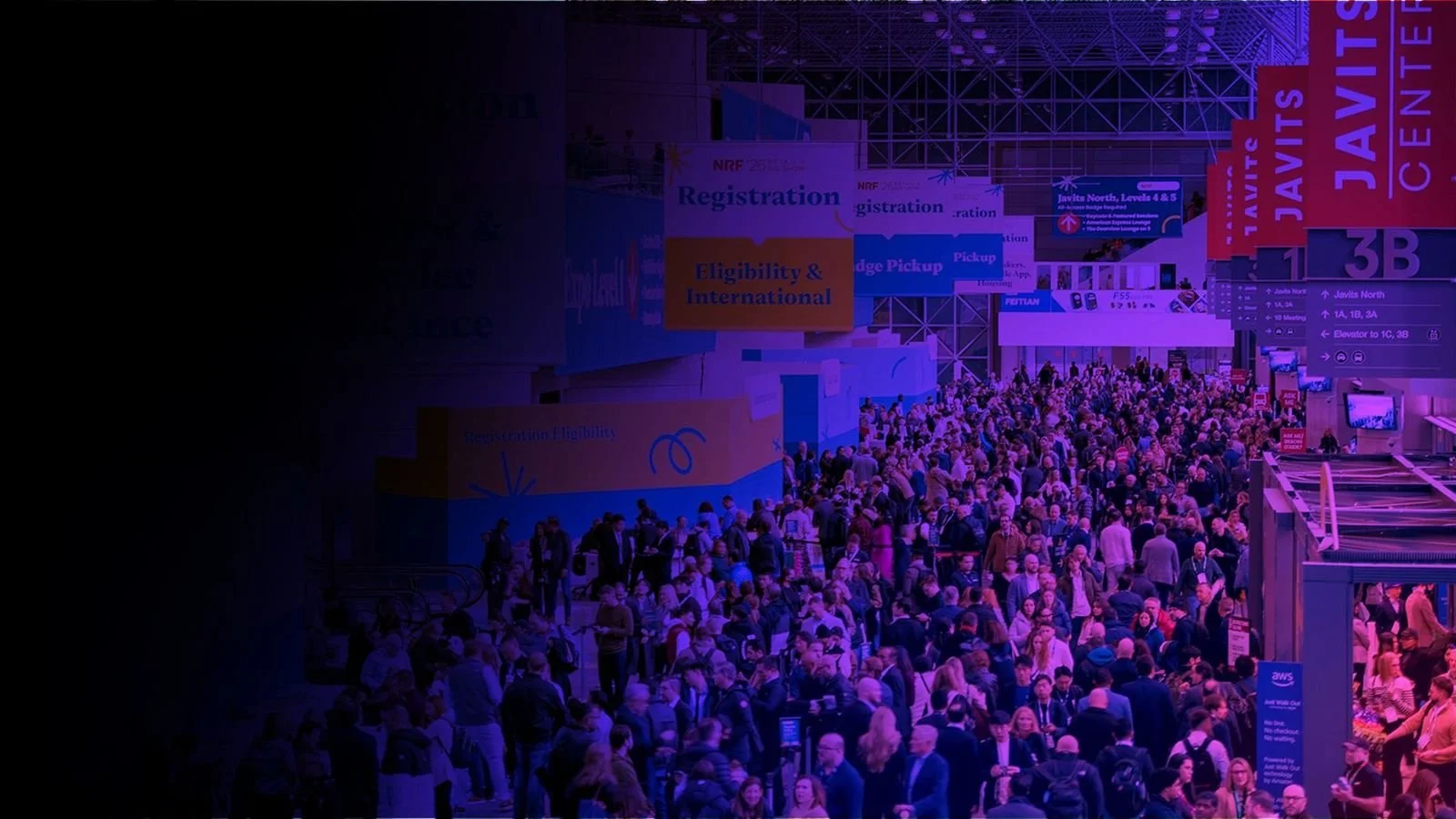
January 11-13 | New York
NRF

41K+
75%
Attendees from around the world
Countries represented
100+
6500+
1000+
335k+
Exhibiting companies
Total exhibition space
Attendees at senior leadership level
Retailers and brands
The Shift NRF 2026
From Taylor’s View:
NRF has always been a technology show dressed in retail clothing. This year, it dropped the pretense.
Across the expo floor and conference stages, the question wasn't what retail might become, it was how retail actually operates in an AI-enabled, omnichannel world.
The concept phase is over. The strongest exhibitors showed systems already running inside stores, supply chains, and customer engagement platforms.
That shift changed the experience of the show floor.
The strongest exhibits translated complex tech into clear, tangible retail applications.
What the Floor Revealed
-
The most effective exhibitors didn't build booths. They built retail environments. Smart shelves, POS stations, RFID readers, and associate devices were integrated into simulated store floors so visitors could see systems working together in context. Rather than explaining technology, they demonstrated how it operates inside the store.
-
Retail technology rarely operates alone, and the strongest exhibits reflected that. Instead of showcasing individual tools, companies demonstrated entire ecosystems — POS, inventory, payments, analytics, and customer data platforms working in sequence. Decision makers are evaluating how technologies connect, not what any single tool does in isolation.
-
Retail is a data business, and the exhibits that made that data tangible stood out. Heat maps, dashboards, shopper analytics, and inventory visibility displays turned invisible systems into something visitors could see, understand, and immediately connect to their own operations. The best booths functioned more like control rooms than showrooms.
-
Even in a software-heavy environment, the most effective exhibits included something you could touch. RFID scanning stations, robotics, smart shelves, and checkout demonstrations gave visitors a physical interaction point that made complex platforms memorable and concrete.


The exhibits that won showed the connected system working — not just the technology behind it.
From the Floor.
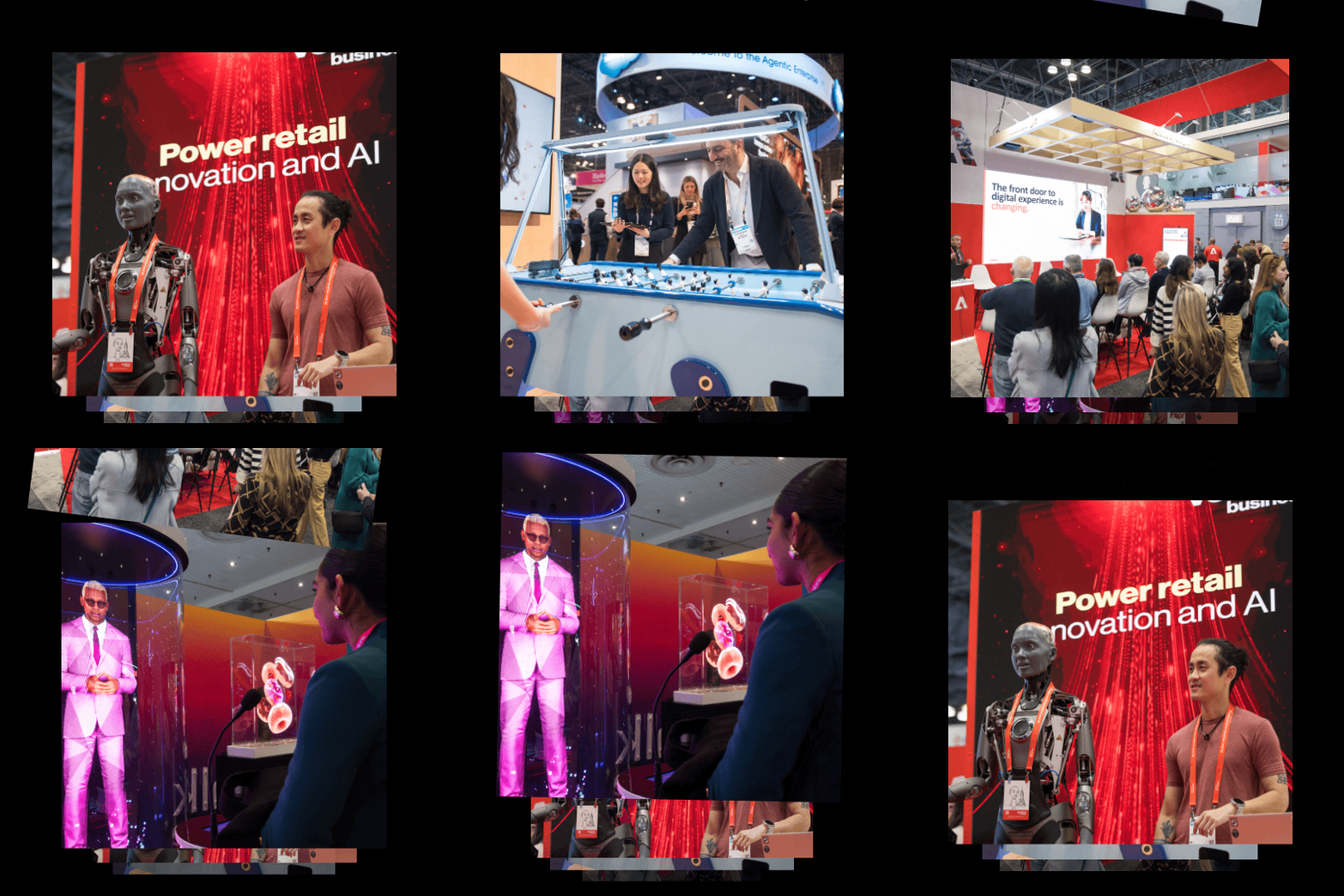
At NRF, technology alone was not enough to capture attention.
Standout Experiences
These experiences show how a handful of companies translated those trends into real experiences across the show.
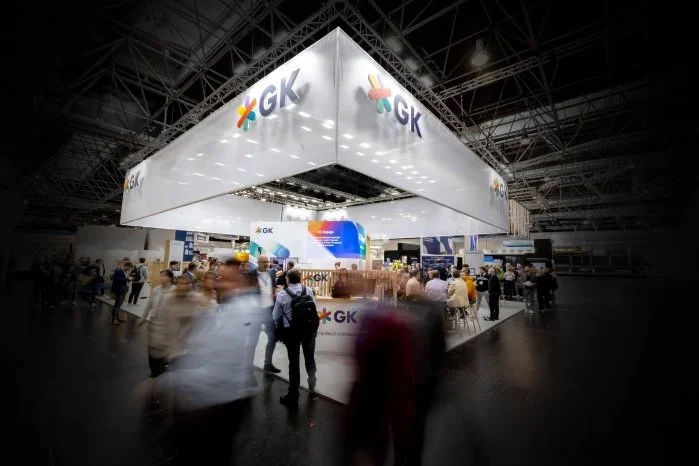
GK Software
Making Retail Interactions Simple
What we built
GK Software built its environment around the connected retail platform — not as a concept, but as a working demonstration. Visitors moved through a series of retail scenarios including point-of-sale, mobile checkout, and AI-assisted store operations. Interactive stations showed how pricing, promotions, payments, and inventory data integrate across physical and digital channels in real time.
Why it worked
The exhibit translated a complex enterprise platform into a clear operational story. Instead of explaining the technology, the environment showed it functioning inside a modern retail ecosystem — making it immediately clear how the system supports everyday store operations while connecting to ecommerce and customer data.
Complex systems are easier to understand when shown in action.
At NRF, GK Software proved that demonstration beats explanation.
More from the floor

Verizon
Verizon put an AI-powered retail robot on the floor — not behind glass, not in a video, but moving through the space and interacting with visitors. In an expo hall full of screens showing what AI could do, Verizon showed it physically operating inside a simulated store environment. It was one of the most stopped-at moments on the floor.
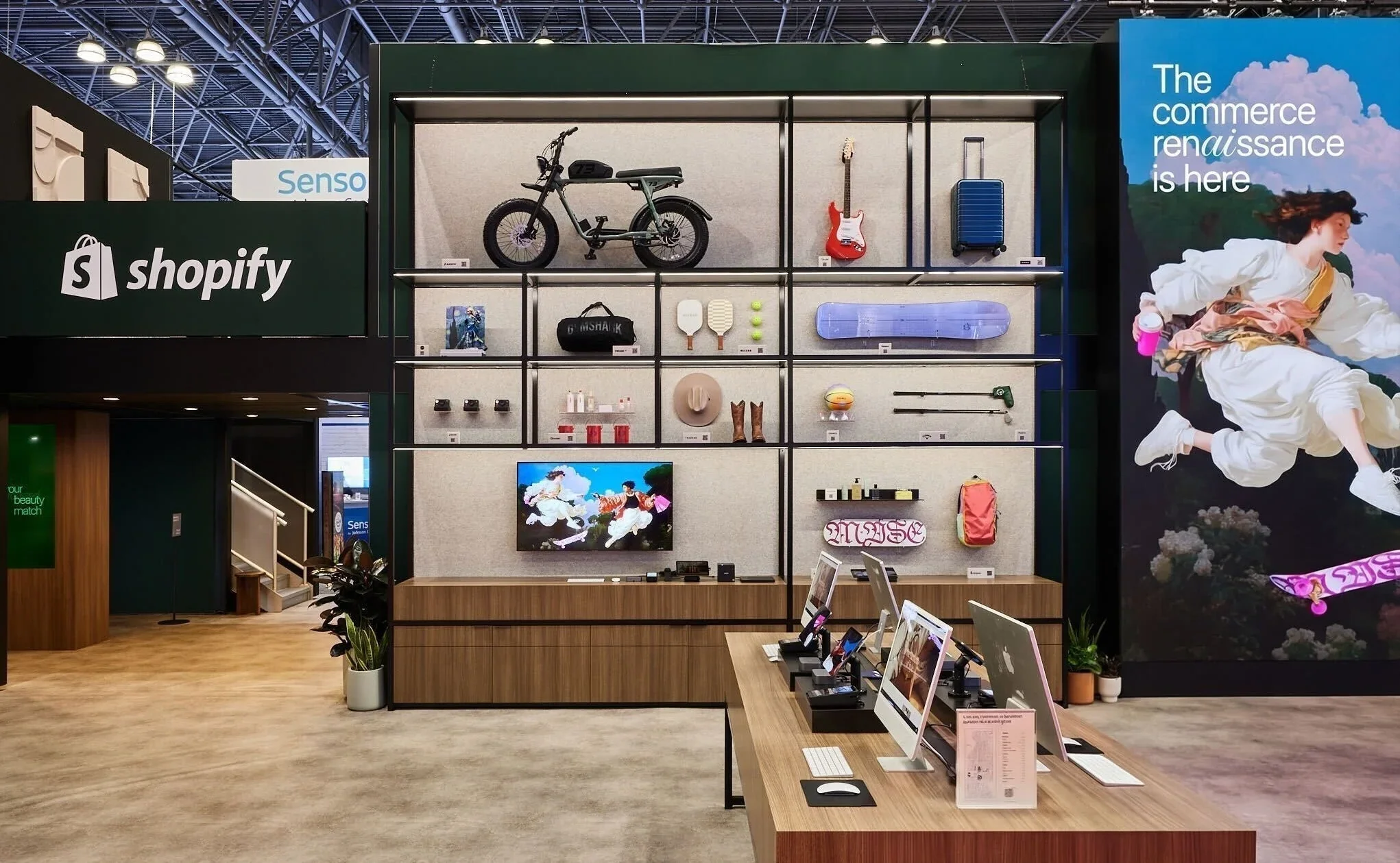
Shopify
Shopify designed its space around the full customer journey — from digital discovery to in-store purchase — demonstrating how its POS, ecommerce, and customer data platforms connect in practice. The strength was in the continuity: visitors didn't see separate products, they saw one system following a shopper from screen to shelf.
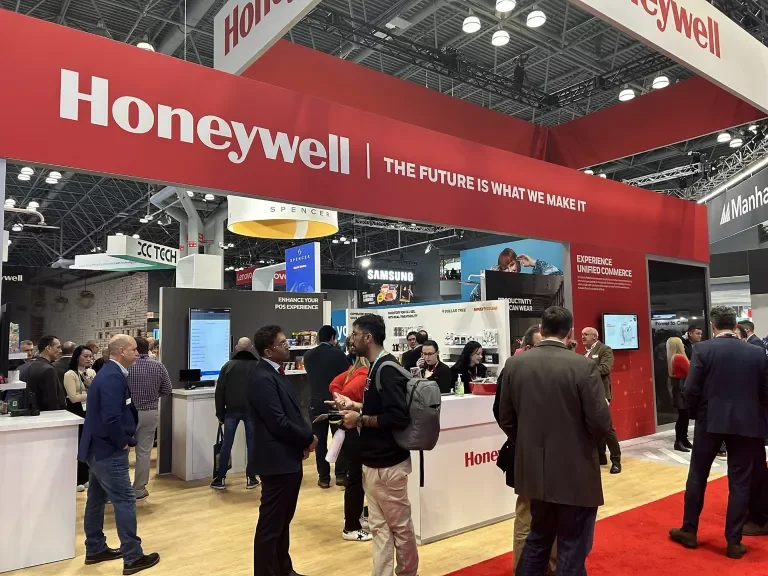
Honeywell
Honeywell recreated a working fulfillment and distribution environment with live robotics, scanning systems, and warehouse automation. While most NRF exhibits focused on the front of the store, Honeywell made the back end visible — connecting supply chain technology directly to the retail outcomes it enables.
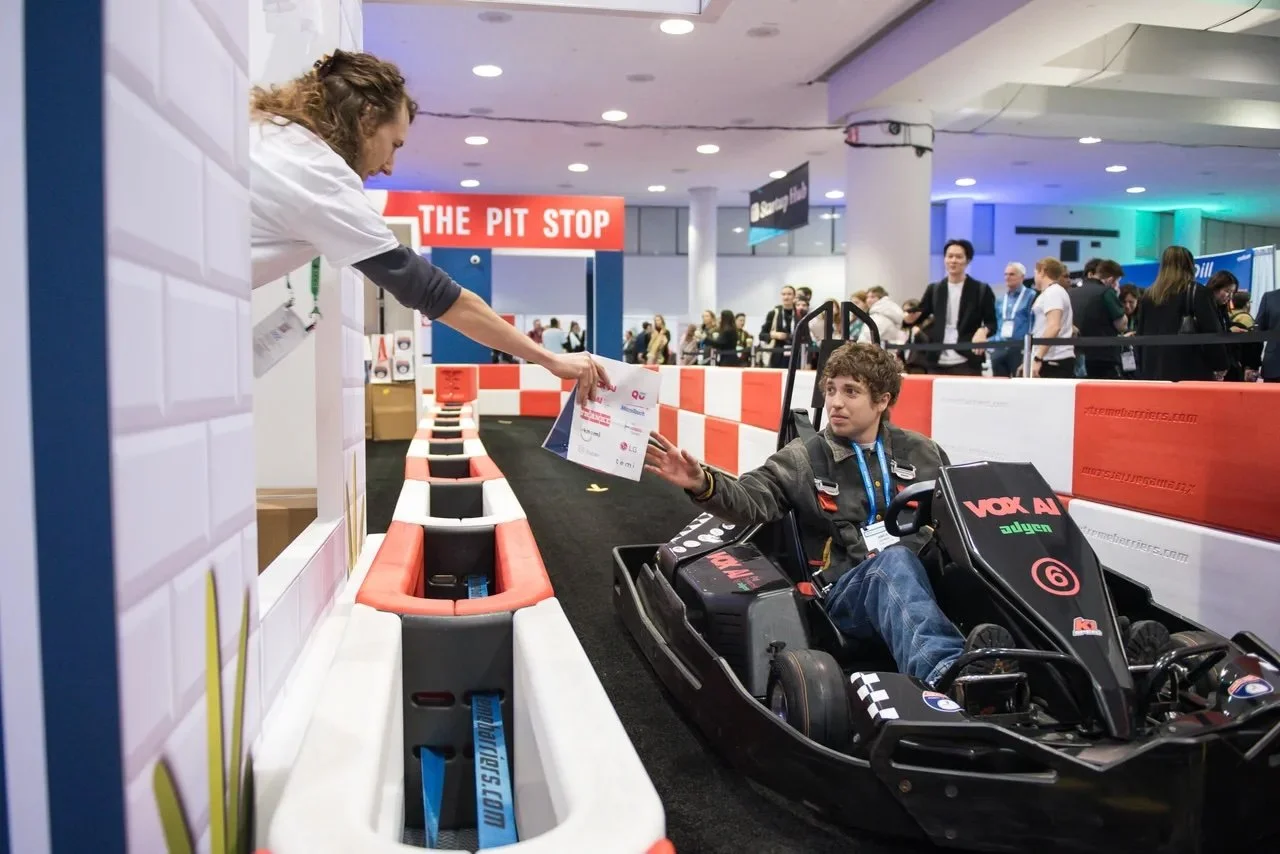
The Howard Company
One of the most creative activations at the show. Located in the Foodservice Innovation Zone, the Pit Stop put visitors behind the wheel of a go-kart and moved them through drive-thru, digital ordering, counter pickup, and robotic delivery scenarios. It turned a complex restaurant technology stack into something playful and memorable — proof that operational demos don't have to feel operational.
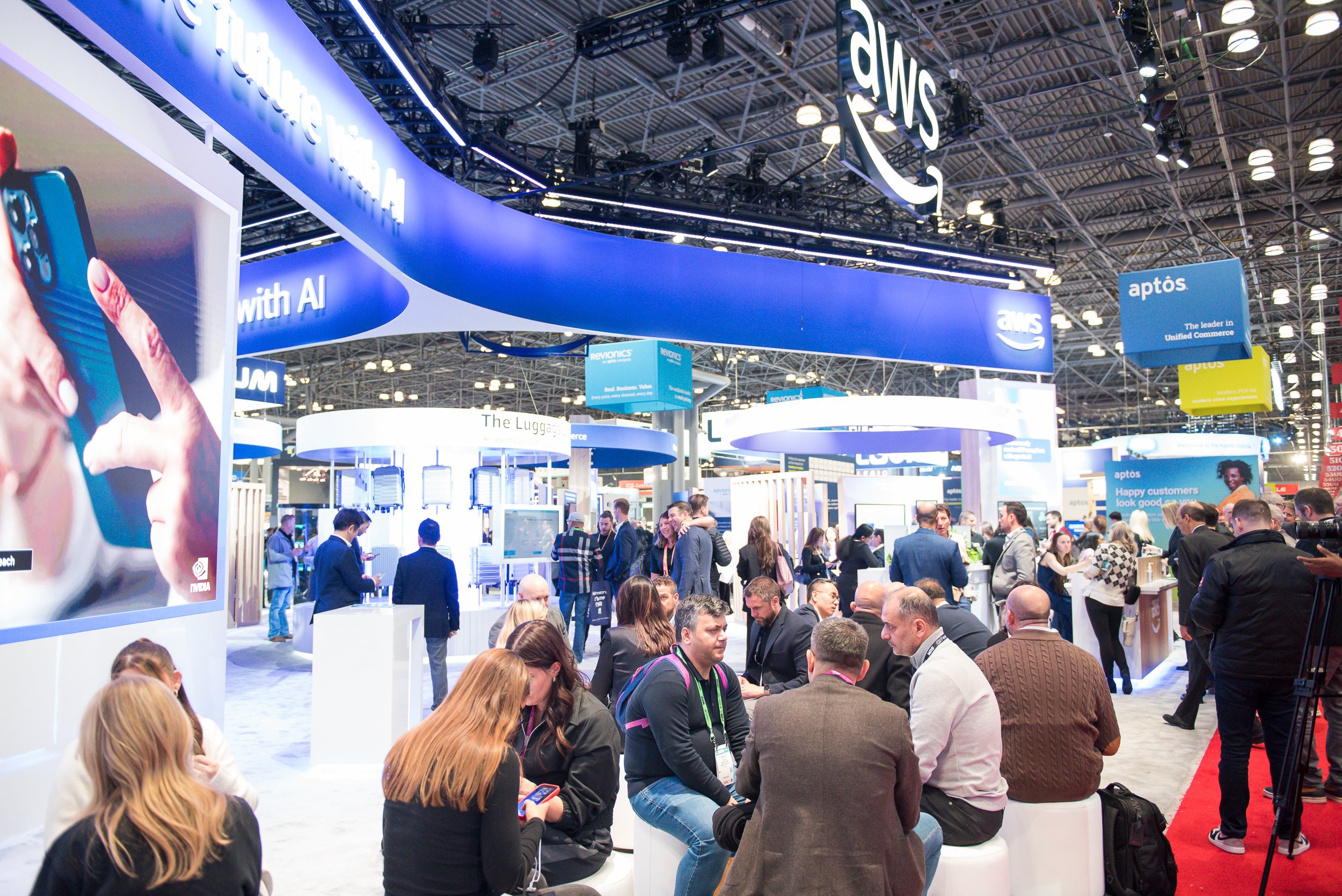
AWS
AWS focused on the infrastructure layer that most exhibitors take for granted — the cloud platforms powering analytics, supply chain intelligence, and generative AI behind modern retail. The exhibit made the invisible visible, showing how cloud architecture supports retail operations at scale. It was a quieter presence than some neighbors on the floor, but substantive for the technical audience walking NRF.
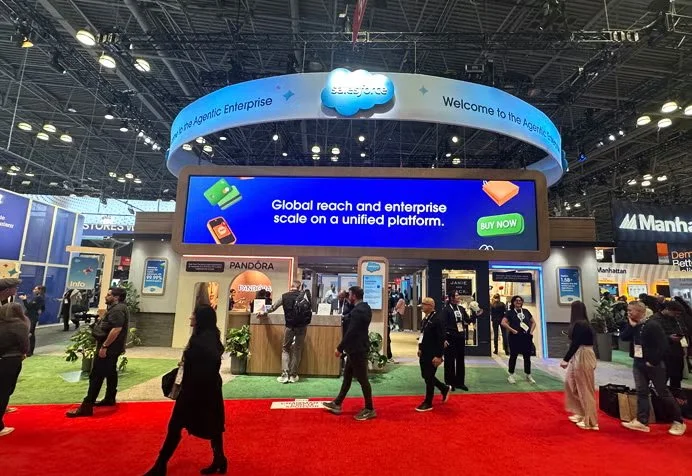
Salesforce
Salesforce built its experience around AI-enabled customer engagement, demonstrating how data, marketing automation, and service platforms connect across the retail journey. The environment was structured to show how a single customer profile moves through multiple touchpoints — from targeted outreach to in-store interaction to post-purchase follow-up.
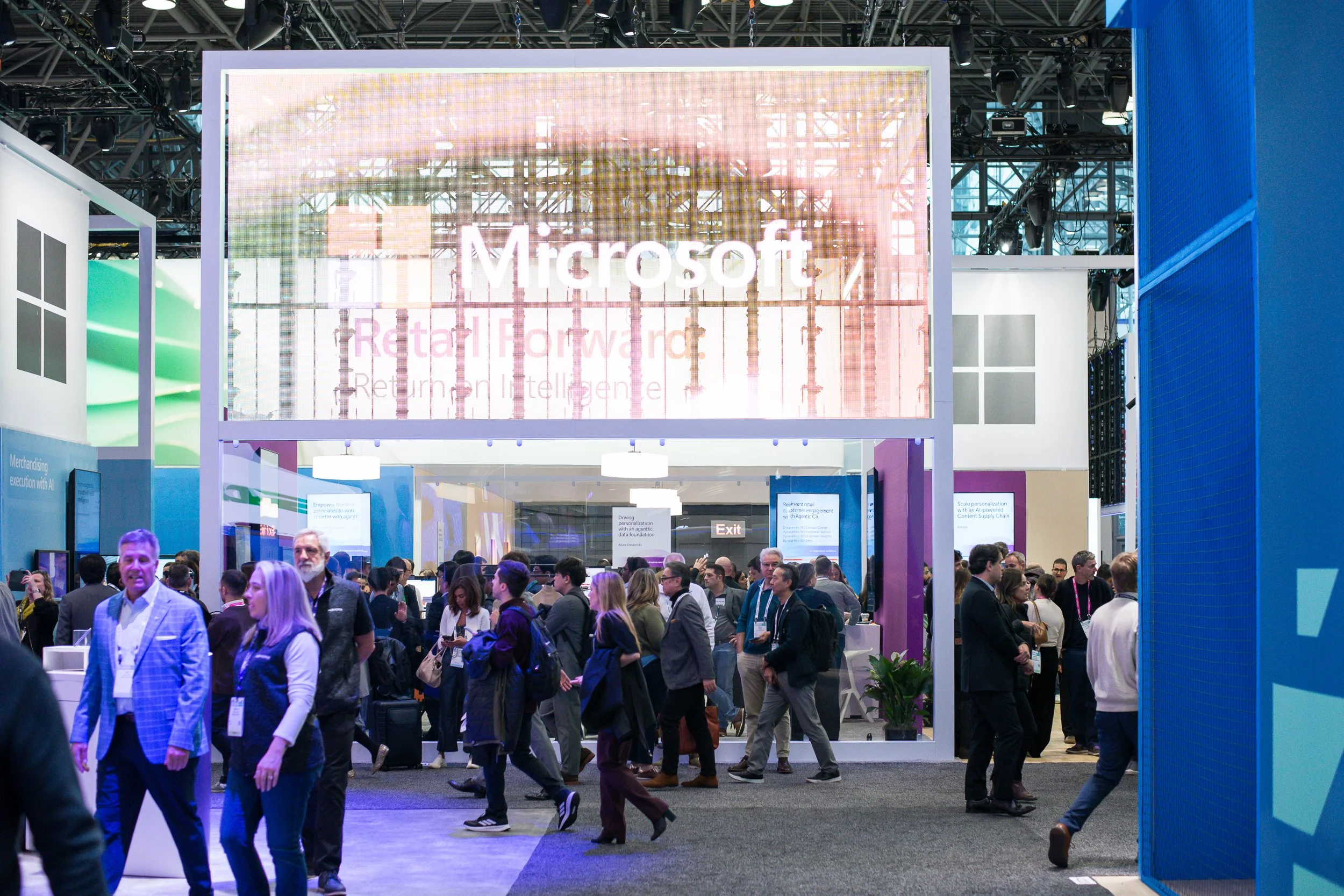
Microsoft
Microsoft demonstrated how AI copilots are being embedded into everyday retail decisions — merchandising insights, inventory management, and customer engagement. The exhibit avoided futuristic positioning and instead showed AI as a practical tool already integrated into the workflows retail teams use today.
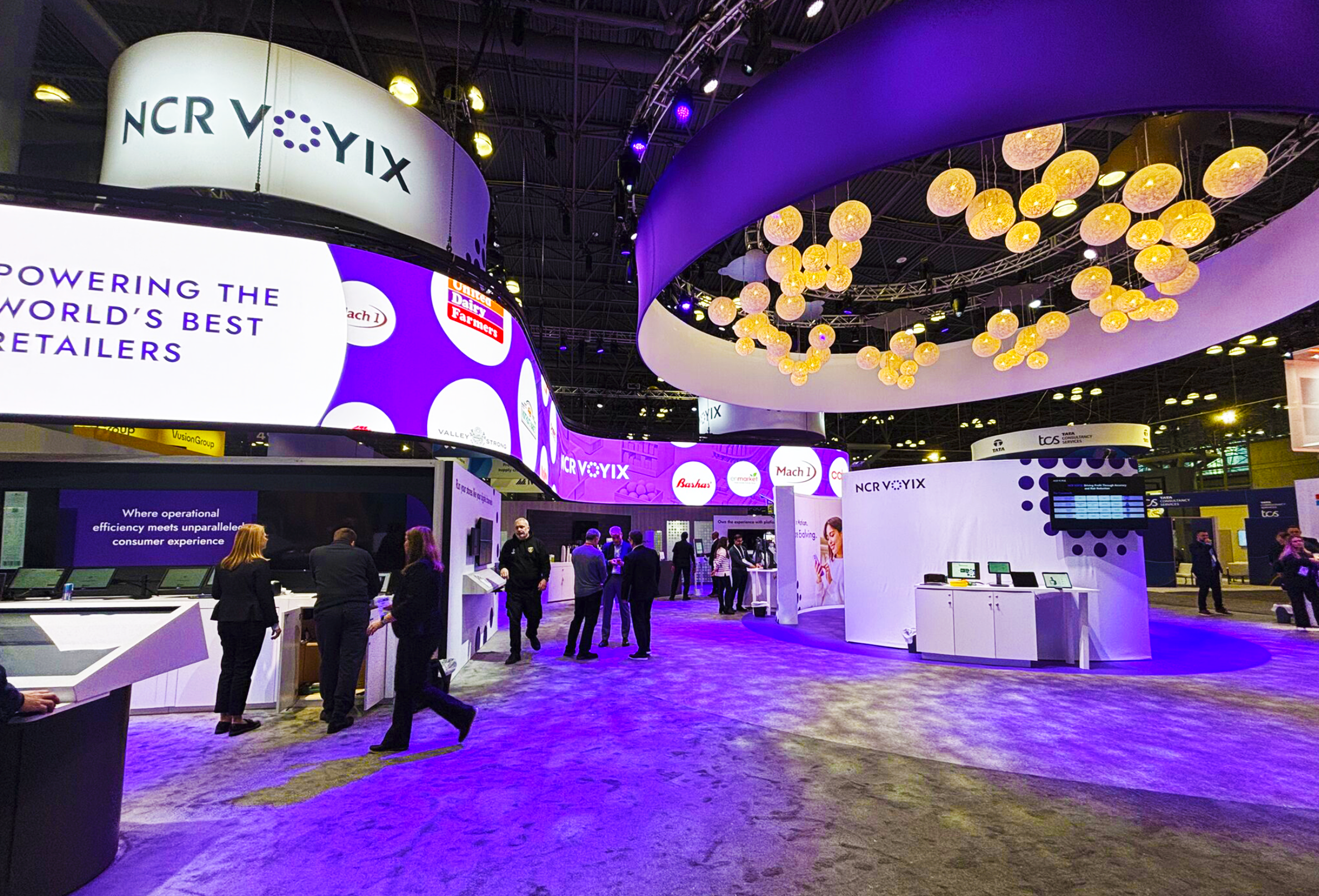
NCR Voyix
NCR Voyix walked visitors through the evolution of checkout — self-checkout, mobile POS, and frictionless payment — inside a simulated store environment. It was practical, hands-on, and grounded in the operational reality of how checkout is actually changing rather than where it might go someday.
Strategic Recommendations
NRF is a different kind of show. The audience is operationally minded, time-constrained, and evaluating technology against real margin pressure. General experiential playbooks don't translate here without adaptation.
These three recommendations reflect what we saw separating the strongest programs from the rest of the floor.
-
The exhibits that resonated at NRF were organized around how retail actually works (think inventory flow, checkout, fulfillment, associate enablement) not around the exhibitor's product portfolio. Frame your program around the problems your audience is solving, not the tools you're selling.
-
The attendees walking NRF are operators. They're evaluating whether your platform fits inside their existing infrastructure, their staffing model, their margin structure. Teams that can speak to integration complexity, implementation timelines, and operational tradeoffs earn more credibility than teams running scripted demos.
-
The best NRF environments doubled as content platforms with live system demos that could be recorded, customer scenarios that could be packaged into case studies, and data visualizations that translated directly into sales materials. If you're investing in a retail show, build the program to produce assets that extend well beyond the three days on the floor.

The Takeaway
AI, automation, inventory intelligence, and unified commerce are no longer emerging ideas. They're the operational infrastructure of retail.
That's changing how companies communicate their capabilities. The exhibits that resonated at NRF weren't the ones with the strongest messaging. They were the ones where you could see the system working. Real scenarios. Real data. Real operations.
The role of the exhibit is evolving — from presenting innovation to demonstrating operational reality. That's the shift we'll continue tracking.
The brands that win at NRF are the ones that make you see how tech works inside a store, a warehouse, or a customer's hands.
Turning insights into execution
Want to see how these trends apply to your programs?
Check the box and a Taylor team member will reach out.