
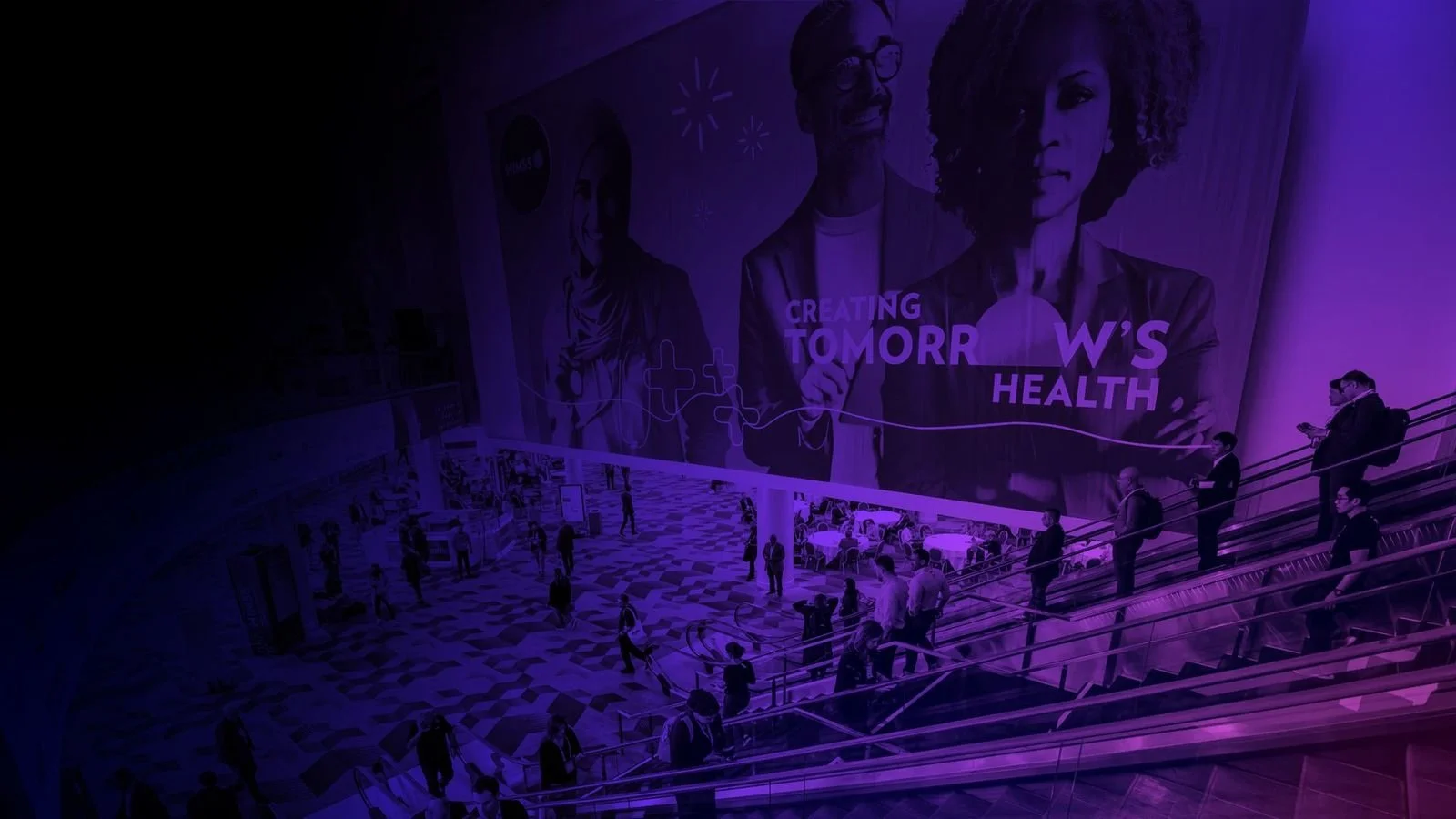
March 9-12 | Las Vegas
HIMSS

72%
29%
170+
1K
Average leads per exhibitor
Exhibiting companies
90+
24K+
Countries represented
Attendees from around the world
C-Suite representation
Are decision makers
What HIMSS Signals Now
From Taylor’s View:
HIMSS operates differently from any other show in this series. The audience isn't evaluating physical products or equipment. They're evaluating platforms, workflows, and enterprise systems that will shape how healthcare is delivered for years.
The buying cycle is long. The stakeholder groups are large. And the compliance, security, and interoperability requirements surrounding every decision add layers of scrutiny that most industries don't face.
In 2026, the conversation shifted. AI moved from pilot programs and proof-of-concept discussions into enterprise deployment. The question on the floor was no longer "should we adopt AI?" It was "how do we govern it, scale it, and connect it to what we're already running?"
That shift changed the tone of the exhibit hall. The strongest programs didn't just demonstrate technology. They demonstrated how that technology operates inside a real clinical environment — safely, compliantly, and at scale.
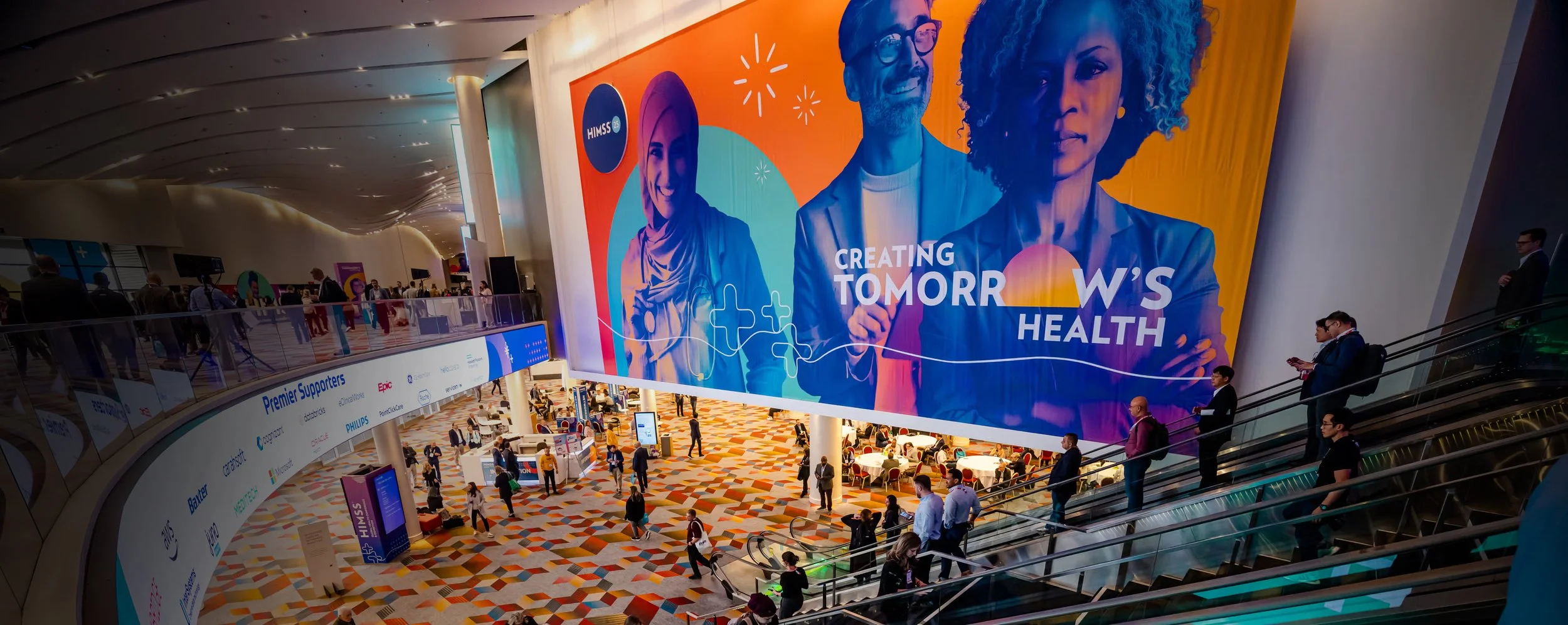
What the Floor Revealed at HIMSS
-
The dominant theme at HIMSS 2026 wasn't AI hype — it was AI governance. Health systems are deploying AI across clinical documentation, decision support, claims processing, and care navigation. Epic reported 85% of its customer base is actively using its AI suite. Amazon introduced Health AI, an agentic assistant built on Bedrock. The exhibits that stood out were the ones showing AI embedded in workflows — not as a feature, but as operational infrastructure. For exhibitors, the implication is clear: if your AI story is still about potential, you're behind the floor.
-
Cybersecurity dominated sessions and exhibit floor conversations alike. After years of high-profile breaches, health systems are treating security as a clinical concern, not just an IT one. The strongest exhibits positioned cybersecurity solutions within the context of care delivery — showing how protection connects to uptime, data integrity, and patient outcomes. For exhibitors in this space, the message that landed wasn't "we protect your data." It was "we protect your ability to deliver care."
-
Federal policy is pushing data liquidity harder than ever. Treating patients without a complete picture of their health record leads to errors, gaps, and adverse events. The exhibits that resonated showed how platforms connect — EHR to EHR, system to system, data to decision. For healthcare exhibitors, standalone product demonstrations are losing relevance. Buyers are evaluating how your solution integrates with what they already have.
-
HIMSS 2026 introduced "The Park" — a new experiential space on the exhibit floor designed for spontaneous collaboration, interactive demonstrations, and creative networking among emerging companies and healthcare leaders. It was a departure from the traditional booth-and-badge model, and it drew strong engagement. For exhibitors and event marketers, it's a signal: the format of healthcare exhibit environments is evolving toward more open, participatory design.
From the Floor.
The exhibits that earned attention at HIMSS showed technology operating inside real clinical contexts — not in isolation, but connected to the workflows, governance structures, and data systems that healthcare runs on.

Technology alone didn't earn attention.
Context did.
Standout Experiences
These experiences show how a handful of companies translated those principles into real experiences across the show.
More from the floor
Phillips Workflow over product
Philips organized its exhibit around real clinical environments — Critical Care, General Ward, and diagnostic settings — rather than product categories. Color-coded zones guided attendees through different care scenarios while large-format clinician imagery and the headline "Unlock actionable insights at scale" positioned the technology as a clinical decision-making layer, not a standalone product. The mix of scrubs and suits on the floor reflected exactly who Philips was designing for: clinicians and IT leaders evaluating the same system from different perspectives.
SUKI Lead with the ROI.
AI infrastructure company Suki built its message around three outcomes healthcare leaders care about most: reclaiming clinical capacity, accelerating payments, and connecting ambient clinical intelligence to ROI. A lounge-style "Bistro" environment replaced the typical demo station format, creating space for longer conversations in a show where most interactions are rushed. The messaging was specific and financial — not aspirational.
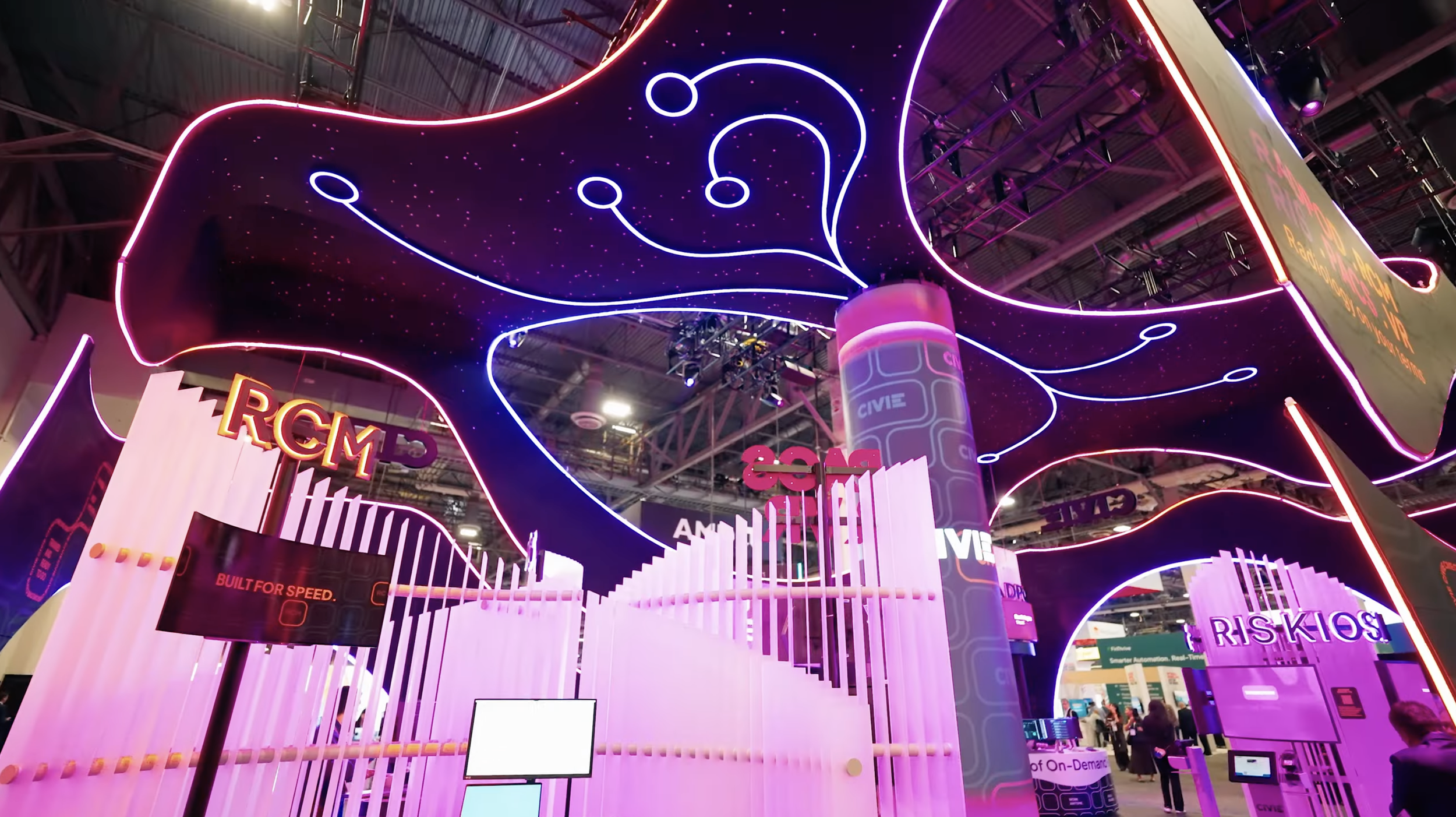
Civie Go narrow. Go deep.
"More than dashboards." Civie used HIMSS to introduce a connected AI ecosystem for radiology operations — unifying data, aligning stakeholders, and turning clinical information into action. In a show where AI was everywhere, Civie stood out by narrowing the focus to one specialty and going deep rather than broad.
AWS Built for Healthcare
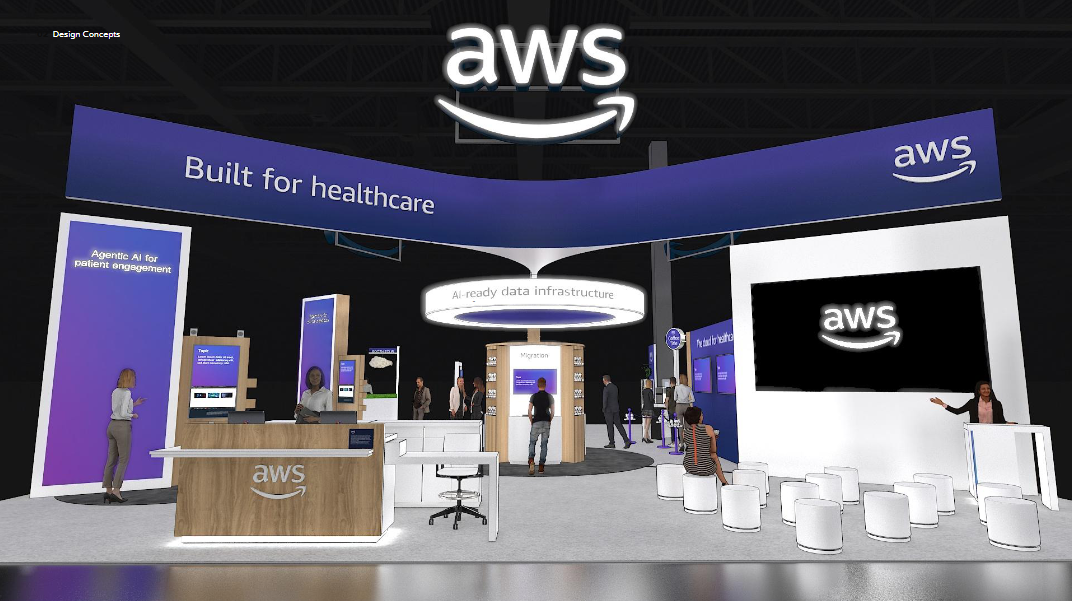
"Built for healthcare" not "available for healthcare." AWS framed its entire HIMSS presence around purpose-built infrastructure, with zones dedicated to AI-ready data, agentic AI for patient engagement, security, and migration. A "Builder's Corner" invited hands-on technical exploration, while the central "AI-ready data infrastructure" hub positioned AWS as the foundation layer that healthcare systems build on. In a show where most exhibitors demonstrated applications, AWS demonstrated the platform underneath.
DELL Built for healthcare
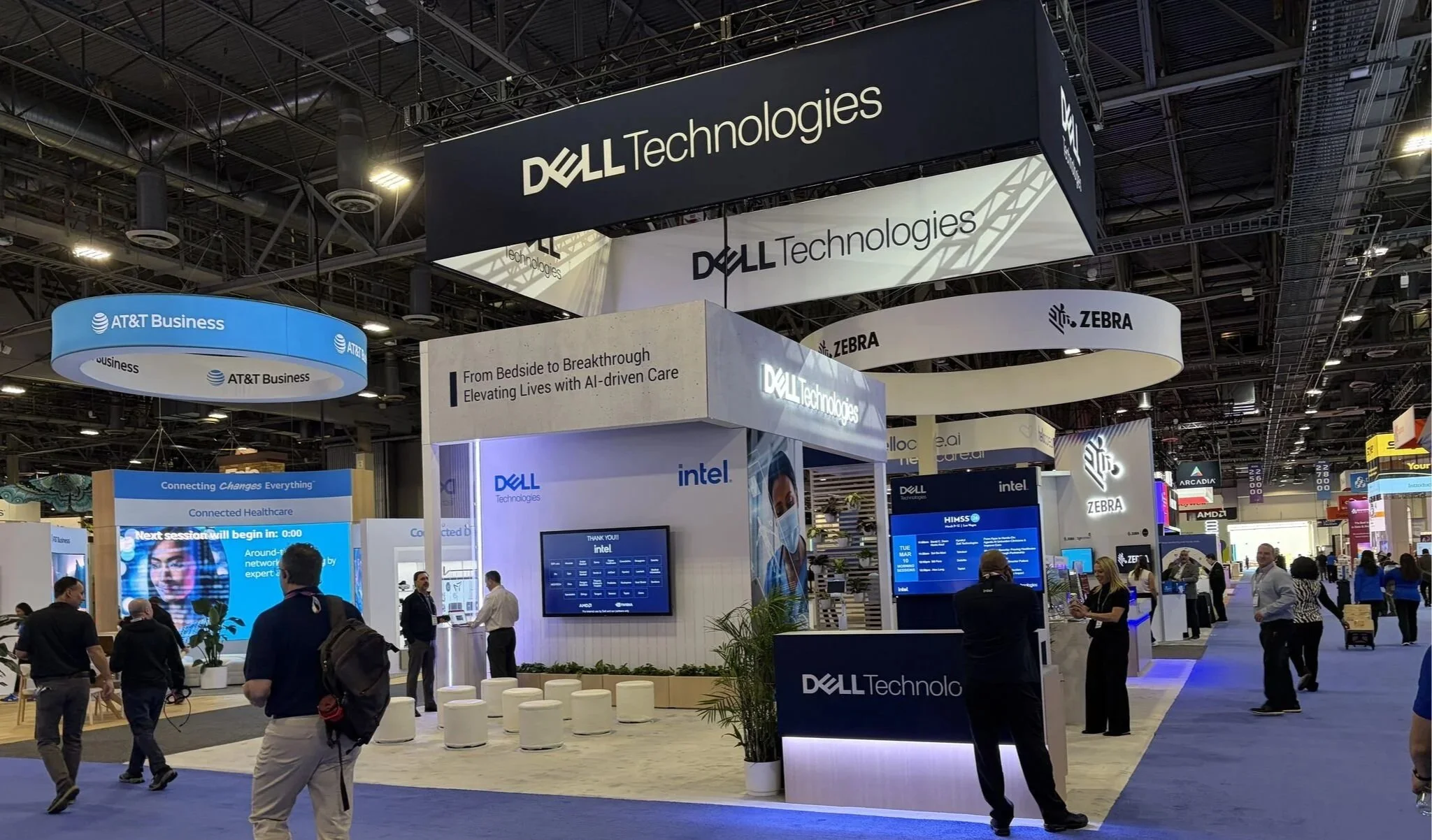
"From Bedside to Breakthrough — Elevating Lives with AI-driven Care." Dell and Intel partnered on a clean, conversation-oriented space built for scheduled demos and expert-led meetups rather than floor traffic. The design prioritized seated discussions over walk-up engagement — a deliberate choice for an audience evaluating infrastructure decisions that take months, not minutes.
Andor Health Serve the underserved
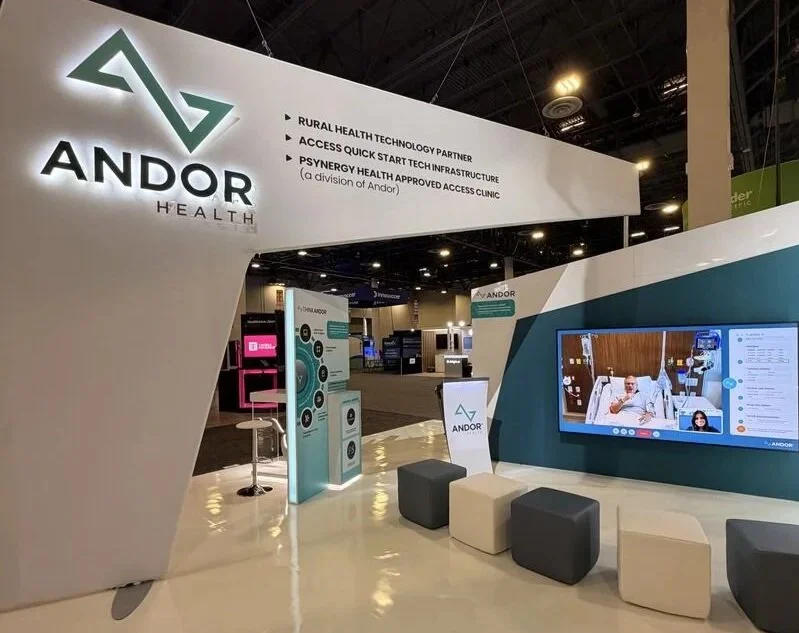
Rural health technology partner Andor built its space around a live virtual care demonstration — a large screen showing a real patient room with active monitoring. The messaging was specific: quick-start tech infrastructure for underserved communities. In a show dominated by enterprise-scale platforms, Andor stood out by addressing the hospitals most others overlook.
Greenway Health Say less mean more
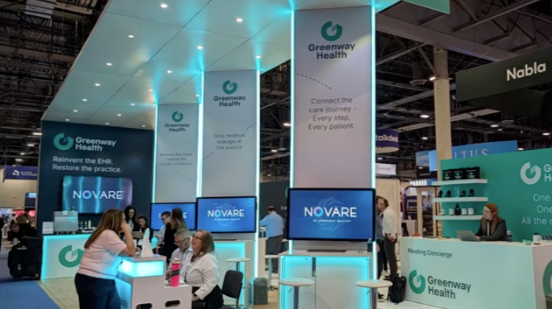
"Reinvent the EHR. Restore the practice." Greenway used a tight footprint efficiently — illuminated columns with clear message pillars (connect the care journey, stop revenue leakage) and a dedicated Meeting Concierge desk for scheduled conversations. The Novare platform was front and center. Clean, focused, and built for a mid-market audience that values clarity over spectacle.
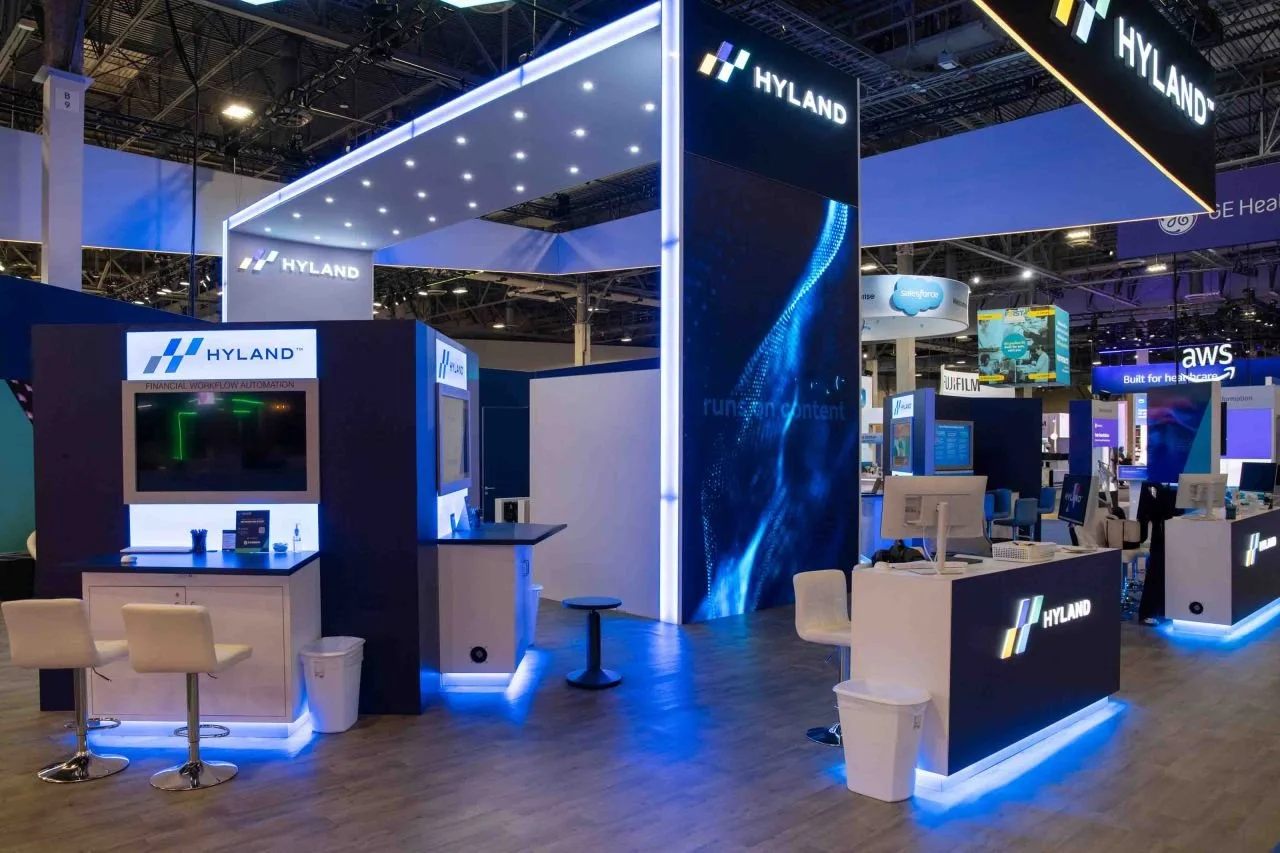
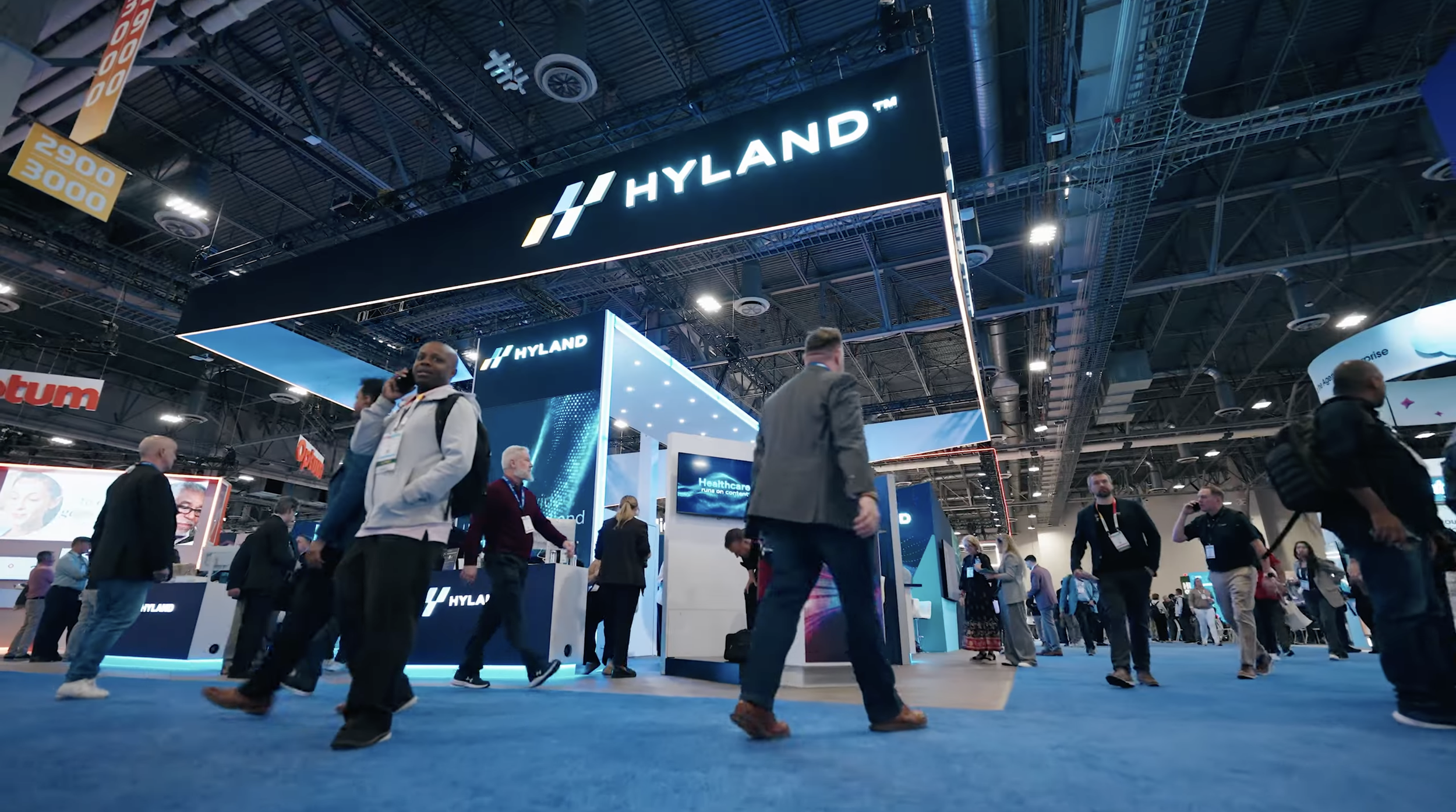
Hyland Design signals confidence
One of the most visually striking booths on the floor. Deep blue environment with LED accent lighting, a central digital tower, and "runs on content" as the throughline. Dedicated stations for Financial Workflow Automation and content management gave the space clear functional zones. The design signaled enterprise scale while the layout kept conversations focused and navigable.
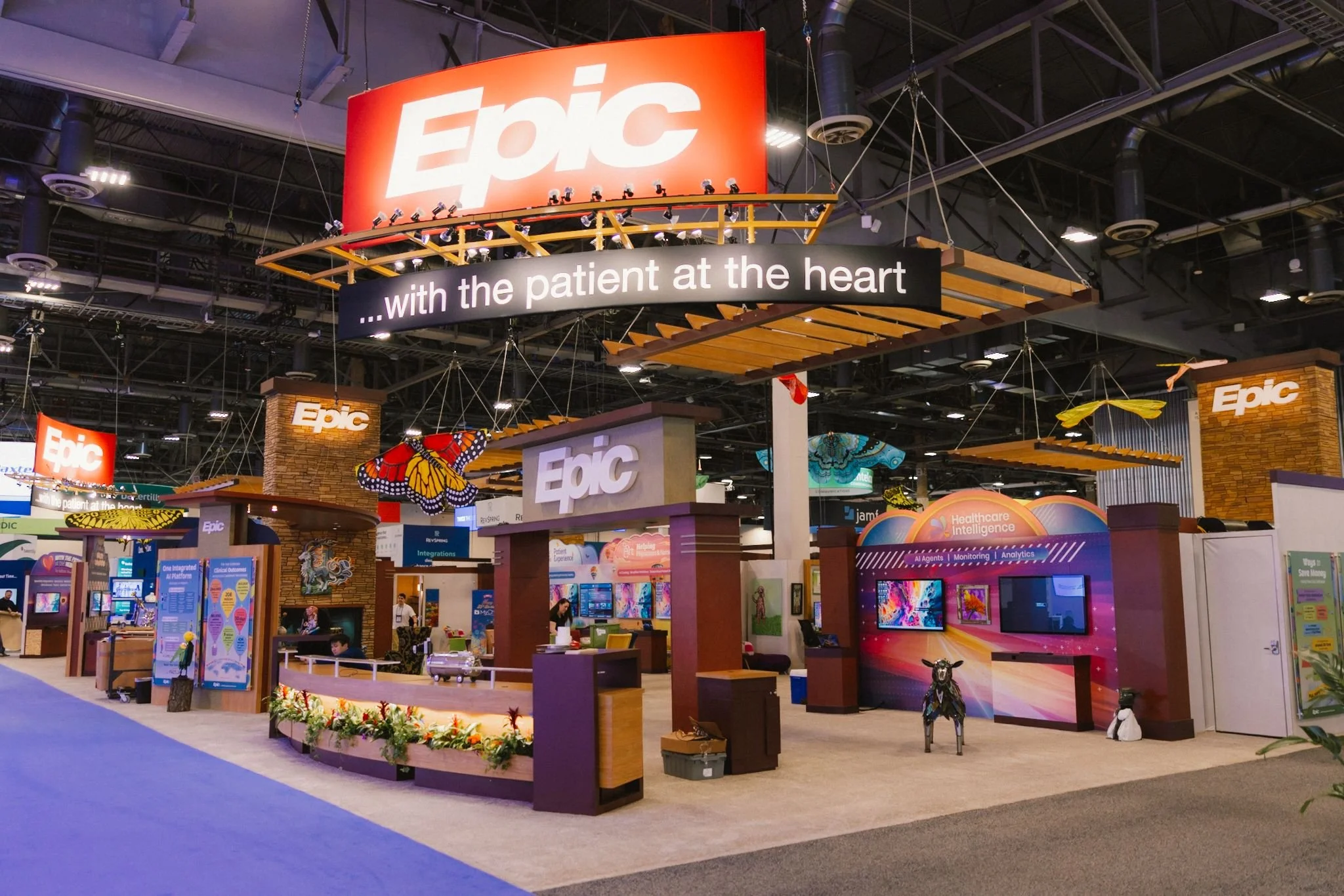
Epic Systems No one else looks like this…
The largest and most recognizable booth on the floor. "...with the patient at the heart" anchored the messaging while the environment itself — wooden pergolas, oversized butterflies, animal figurines, and a Healthcare Intelligence hub — felt more like a creative campus than a software exhibit. Zones for Clinical Outcomes, Integrations, and AI Agents gave structure beneath the personality. Epic doesn't design booths to blend in. It designs them to be unmistakable.
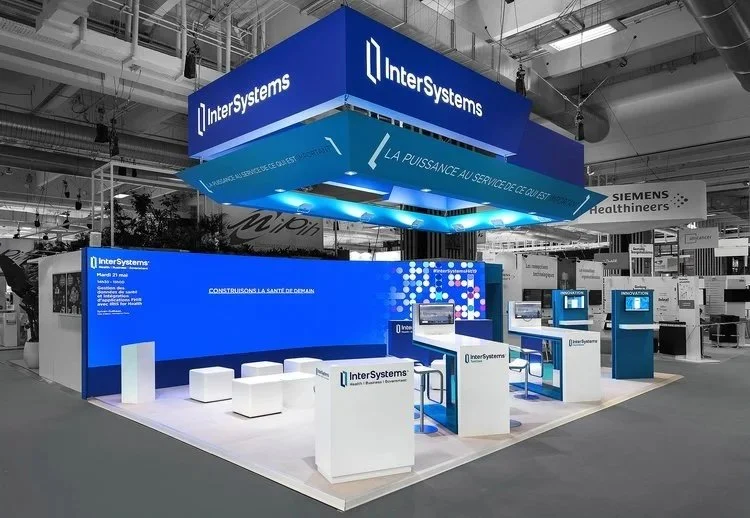
InterSystems Clarity is the brand
Rural health technology partner Andor built its space around a live virtual care demonstration — a large screen showing a real patient room with active monitoring. The messaging was specific: quick-start tech infrastructure for underserved communities. In a show dominated by enterprise-scale platforms, Andor stood out by addressing the hospitals most others overlook.
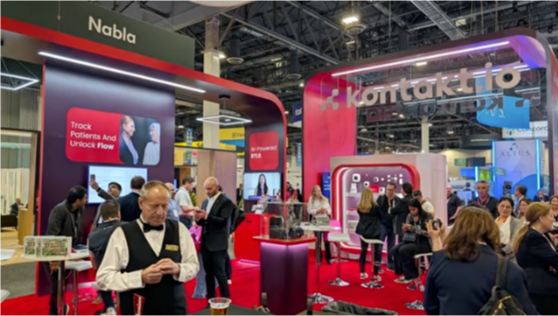
Kontakt.io Small footprint. Big presence.
"Track Patients and Unlock Flow." Kontakt.io brought energy to a compact space with bold red flooring, AI-powered RTLS demos, and a hospitality-forward setup that included catered service. The booth drew consistent traffic — proof that a smaller footprint with a strong visual identity and a clear value proposition can compete with neighbors ten times its size.
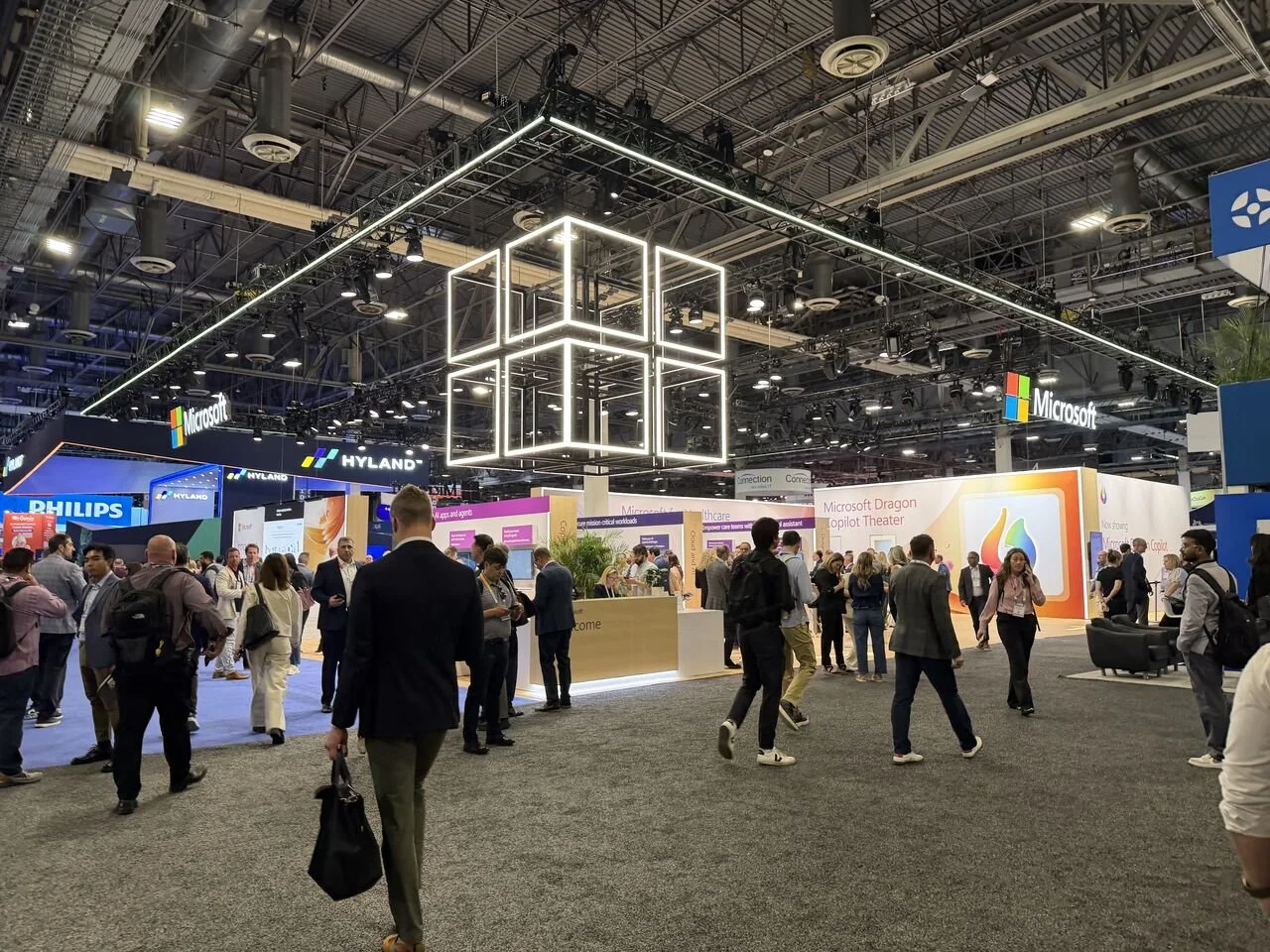
Microsoft The platform play, made physical
One of the largest footprints at HIMSS, anchored by a geometric LED cube overhead that served as a landmark from across the hall. The space was organized around Dragon Copilot, mission-critical security, and "Simplify work with AI apps and agents" — with interactive touchscreens at the perimeter and a dedicated Copilot Experience Zone. Partner integrations (UChicago Medicine, Agentforce) were woven into the environment. Microsoft built a platform exhibit in every sense — showing how its tools enable the ecosystem around it.
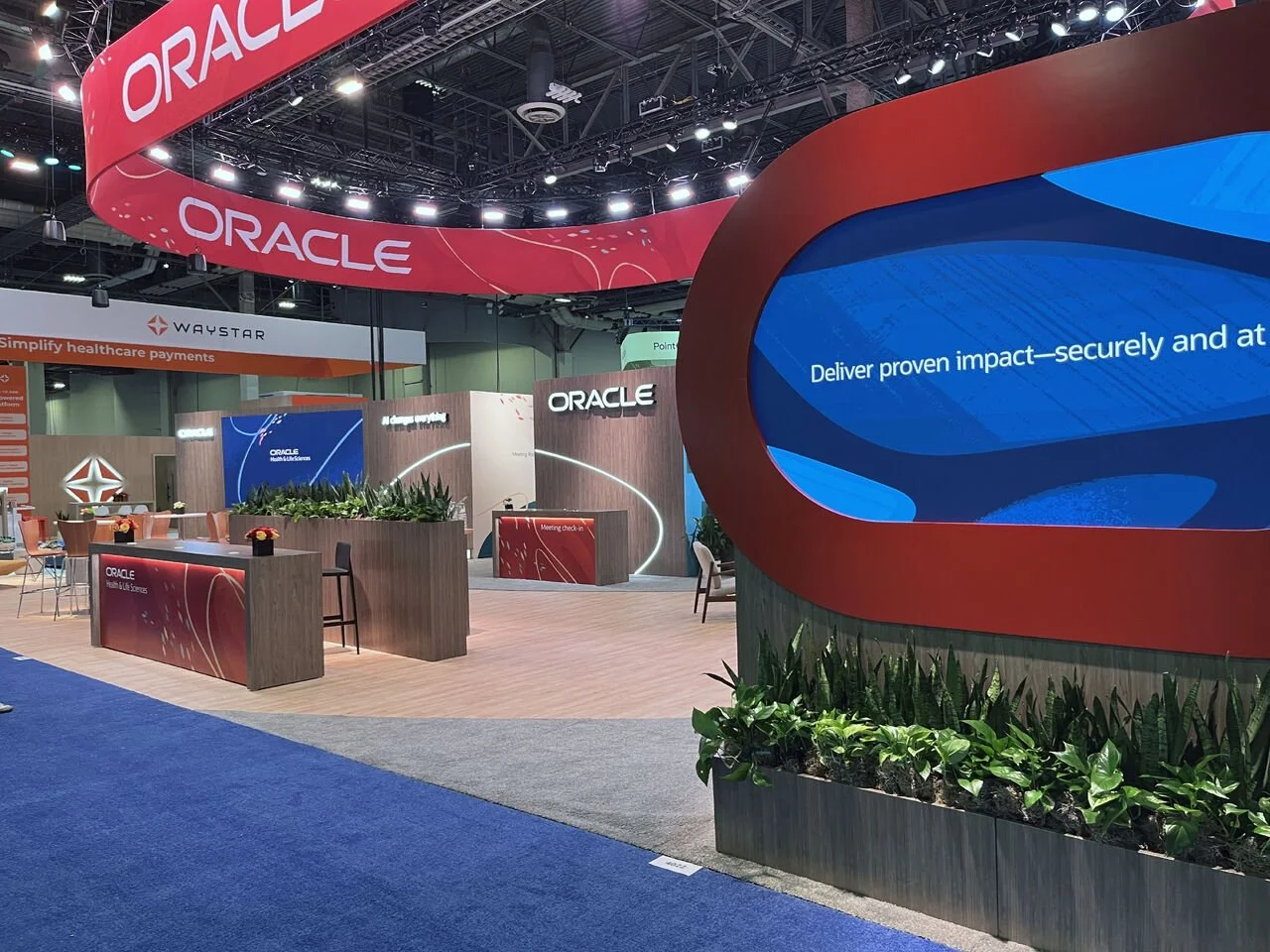
Oracle Health Scale meets warmth
"Embrace human-centric, trustworthy AI solutions." "AI changes everything." "Deliver proven impact — securely and at scale." Oracle ran one of the most layered messaging environments at the show, with a massive red overhead ring, a sculptural LED centerpiece, and a warm lounge environment mixing wood, plants, and comfortable seating. The Health and Life Sciences division had its own branded area. The space balanced bold brand presence with an environment that invited people to sit, stay, and talk.
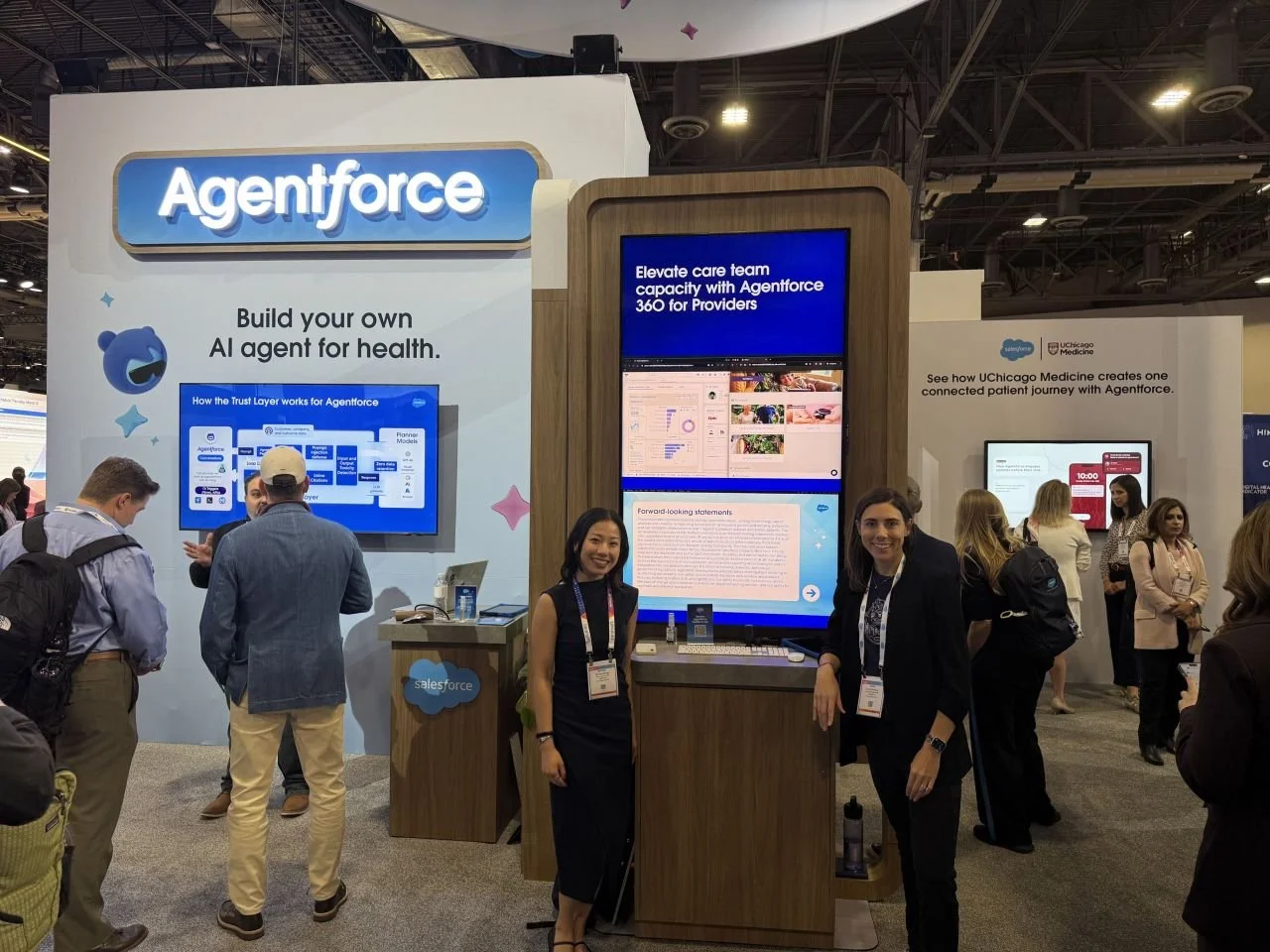
Salesforce Trust first. Then automate.
"Focus on patients, not paperwork with Agentforce 360." Salesforce led with its agentic AI platform — Agentforce — positioned explicitly for healthcare providers. A dedicated zone showed how UChicago Medicine uses the platform to create a connected patient journey. The "Trust Layer" architecture was on display for the governance-minded buyer. The environment was warm, approachable, and staffed deep — signaling that Salesforce is serious about healthcare as a vertical, not a side market.
Strategic Recommendations
Healthcare environments operate under constraints that most industries don't face — longer buying cycles, larger decision-making groups, and compliance requirements that shape every interaction.
These recommendations reflect what separated the strongest programs at HIMSS 2026.
Healthcare buyers aren't choosing technology.
They're choosing who they trust to operate inside their system.
-
Healthcare buyers aren't evaluating tools in isolation. They're evaluating how a platform fits into their existing clinical and operational environment. The exhibits that resonated at HIMSS demonstrated technology running inside realistic workflows — documentation, care coordination, claims management — not on a feature screen.
-
Healthcare purchasing involves CIOs, CMIOs, clinical leaders, IT directors, and compliance teams. The most effective exhibits at HIMSS created space for group evaluation — areas where multiple stakeholders could see the same demonstration, ask different questions, and reach alignment together. Single-viewer demos underserve this audience.
-
Standalone solutions are a red flag. Buyers want to understand how technology fits into what they already use.
Demonstrate EHR integration and data flow
Map where the solution sits within the workflow
Visualize interoperability across systems
Why this matters:
Interoperability remains a major barrier. Experiences that show seamless integration reduce perceived implementation risk. -
Healthcare attendees are selective and time-limited. Unstructured booths underperform.
Create guided pathways with defined entry points
Design role-based narratives (clinical, IT, executive)
Incorporate short, facilitated demos and scheduled briefings
Why this matters:
HIMSS floor behavior shows a shift toward high-efficiency, high-value interactions over exploration. -
Overstating capability erodes credibility. The strongest brands acknowledged constraints and showed how they are managed.
Address implementation challenges directly (training, integration, change management)
Position AI as augmentation, not replacement
Show phased adoption or scalability pathways
Why this matters:
Trust is a primary barrier. Buyers respond to solutions that feel deployable within real-world conditions, not ideal scenarios.

The Bottom Line
HIMSS 2026 reflected a healthcare tech market that has moved past the experimentation phase.
AI is being deployed at enterprise scale. Cybersecurity is being treated as a patient safety issue. And interoperability is no longer aspirational — it's a regulatory and operational requirement.
For exhibitors, that maturity raises the bar. The programs that performed at HIMSS didn't just show what their technology can do. They showed how it works inside the system — safely, compliantly, and connected to the infrastructure healthcare already depends on.
That's the shift we'll continue tracking.
Turning insights into execution
Want to see how these trends apply to your programs?
Check the box and a Taylor team member will reach out.